
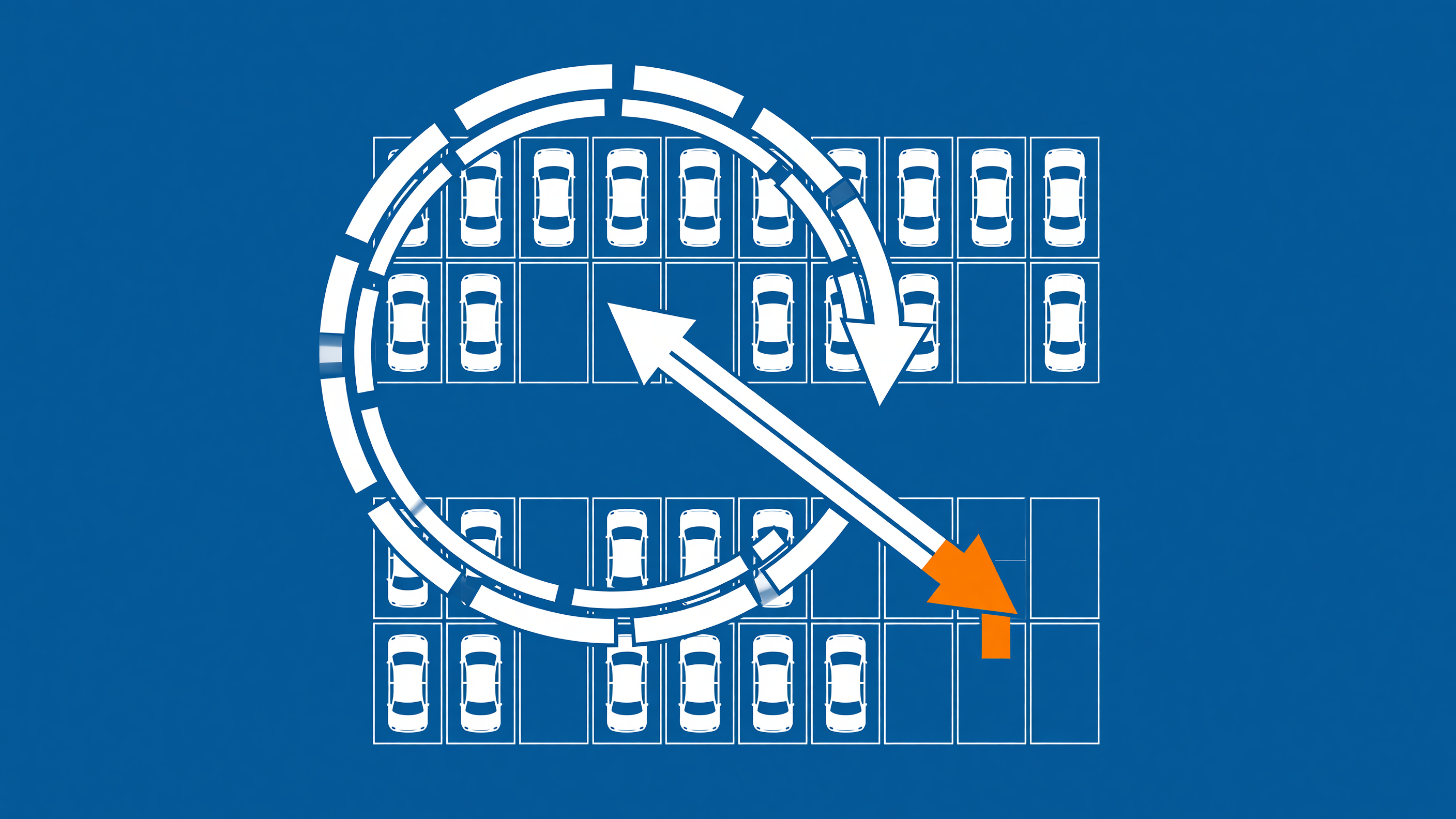
It’s one of the most-studied numbers in the parking world: a meaningful share of urban traffic at any moment is made up of drivers simply looking for a space. “Cruising” — circling the block or climbing deck after deck — wastes the driver’s time, adds congestion to surrounding streets, burns fuel, and sours the experience before the customer has even parked. It’s getting fresh attention this year, and for good reason. Here’s what operators can actually do about it.
Cruising is a findability problem
At its core, cruising happens when drivers can’t tell where the open spaces are. The fixes all reduce that uncertainty:
- Honest, real-time availability. Telling drivers how many spaces are open — at the entrance, on signage, or in an app — is the single most effective intervention. Even a simple facility-level count (“47 spaces” or “Lot Full”) prevents the worst cruising: cars entering a full deck and circling.
- Guidance where complexity warrants it. In large, multi-level garages where a driver genuinely can’t see availability, space-level guidance that directs them to an open zone earns its cost. In a small lot they can read at a glance, it doesn’t. (We weighed this in smart sensors and wayfinding.)
- Faster entry so the queue doesn’t back up. Cruising isn’t only inside the lot — it’s also cars stacked at the entrance while the lane processes slowly. LPR and quick payment keep the entry moving so the search doesn’t start with a wait.
Use the data you already have
If you run a gated facility, you already know your occupancy in real time — the entry and exit counts tell you. That count is the raw material for an availability sign or feed. Many operators are sitting on the exact data that would cut cruising and just aren’t surfacing it to drivers yet. Start there before buying anything new.
Reservations take pressure off the peaks
For predictable demand spikes — events, peak commute, busy retail days — letting customers reserve ahead removes them from the cruising population entirely. They arrive knowing they have a space. It won’t solve everyday cruising, but it flattens the worst peaks.
The takeaway
Cruising is a solvable problem, and the solutions ladder by facility size: surface honest availability everywhere, add space-level guidance only where complexity justifies it, keep entry fast so queues don’t form, and use reservations to flatten peaks. Most operators can make a real dent using data their system already produces.
Want to cut the circling in your facility? Talk to Parking BOXX about surfacing real-time availability and speeding up entry.