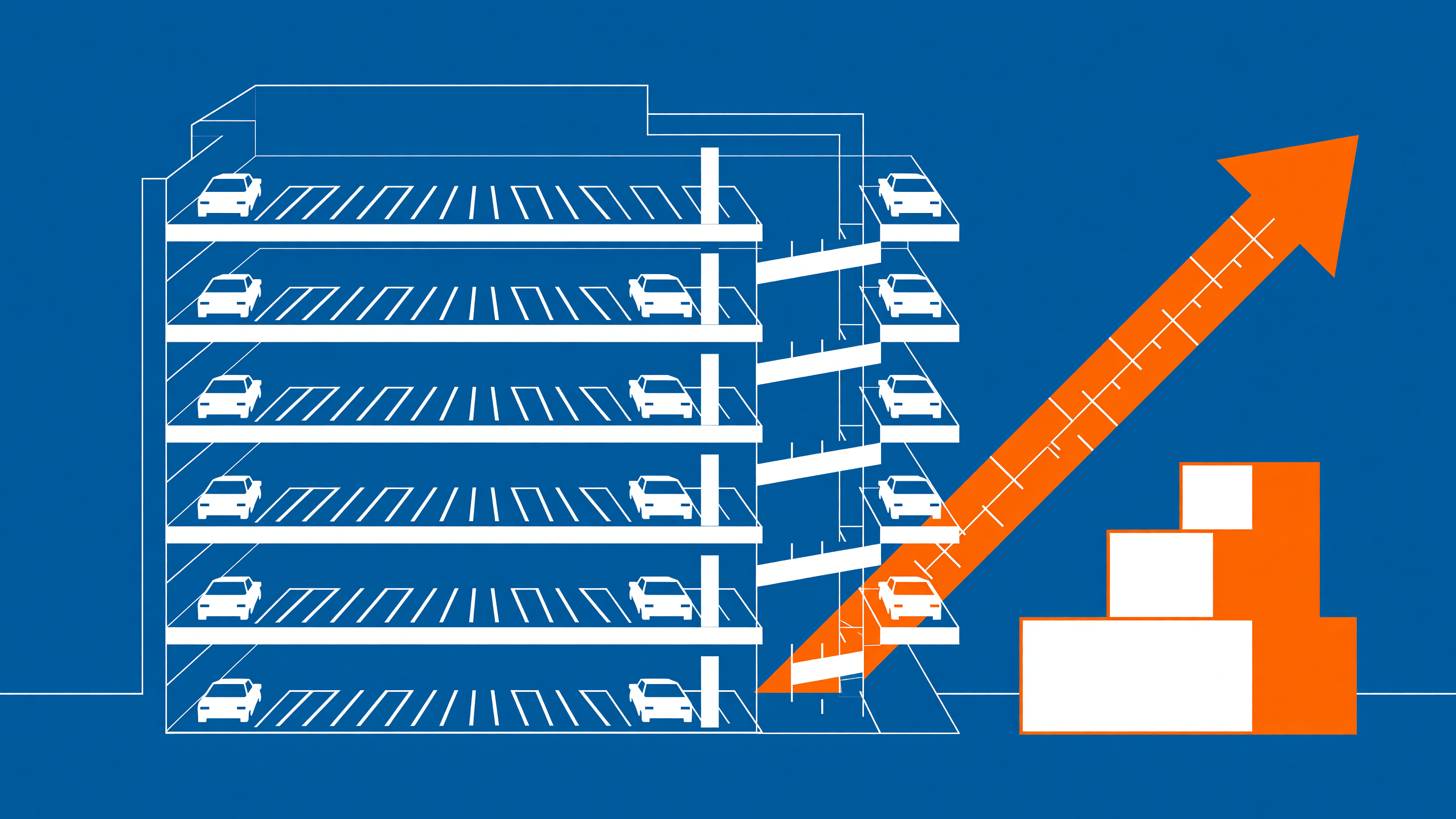
If you’re budgeting a parking project this year, the numbers have moved against you. Industry cost data puts the median price of a new structured parking space at roughly $27,900 in 2021 — an 8.6% jump over 2020, with the trend expected to keep climbing into 2023. Materials, labor, and supply-chain disruption are all pushing the same direction.
That doesn’t mean projects stop. It means planning gets sharper. Here’s how to think about it.
Question the “build new” reflex
When construction costs spike, the math on alternatives to new structure improves:
- Get more from the asset you have. Better throughput — faster entry/exit, LPR for regulars, guidance that fills the spaces you already own — can defer or shrink the need for new capacity. The cheapest space is the one you don’t have to build.
- Refresh equipment instead of rebuilding. Aging entry, exit, and payment equipment can often be modernized within the existing footprint for a fraction of new-structure cost, while improving reliability and revenue capture.
- Right-size new build. If you are building, accurate occupancy data from your existing facilities helps you avoid over-building decks that sit half-empty — expensive at any price per space, brutal at $27,900.
Budget for equipment realistically
Equipment costs are caught in the same inflationary pressure as construction. If a refresh or new install is on your roadmap, two practical moves:
- Lock specifications and pricing early. Lead times have stretched; the gear you spec today may not be installed for months. Get ahead of it.
- Weigh total cost of ownership, not just sticker price. Durable, certified equipment that needs fewer service calls and lasts longer wins decisively when every input is more expensive. (Our barrier gate cost guide breaks down what drives the numbers.)
Use data to defend the budget
An 8.6% cost jump makes every capital request harder to approve. The operators who get projects funded are the ones who bring data: occupancy trends that prove the need, throughput numbers that show the payoff, and a clear comparison of refresh-vs-rebuild. A request backed by numbers beats one backed by “we’ve always done it this way.”
The takeaway
Rising costs reward operators who squeeze more from existing assets, modernize rather than rebuild where they can, and plan equipment purchases around real lead times and total cost of ownership. Build when you must — but make the case with data, and don’t pay for capacity you can create through better throughput.
Facing a capital decision in a high-cost year? Talk to Parking BOXX about modernizing existing lanes to defer or right-size new construction.