By late 2024, “AI” is stamped on every parking product brochure, which makes it hard to tell where it’s doing real work and where it’s a sticker. For gated operators, the genuinely useful applications cluster in two areas you already care about: access and security. Here’s a grounded look at what’s actually paying off — and what to be skeptical of.
On the access side
AI’s clearest contribution to access is reading credentials better and faster:
- Sharper plate reads. As we covered earlier this year, machine-learning LPR handles tough conditions and more plate formats than older systems — within a layered, gated lane that falls back gracefully when a plate can’t be read. (See AI and LPR: better reads, real limits.) The honest framing still holds: better, not perfect.
- Vehicle characteristics as a backstop. Some systems use make, model, and color as a secondary signal when a plate is partly obscured. Useful as a backstop within a gated lane — not a reason to remove the gate.
The point of AI on the access side isn’t to eliminate the barrier; it’s to make the recognized-vehicle path faster and more reliable.
On the security side
This is where AI is quietly delivering the most day-to-day value:
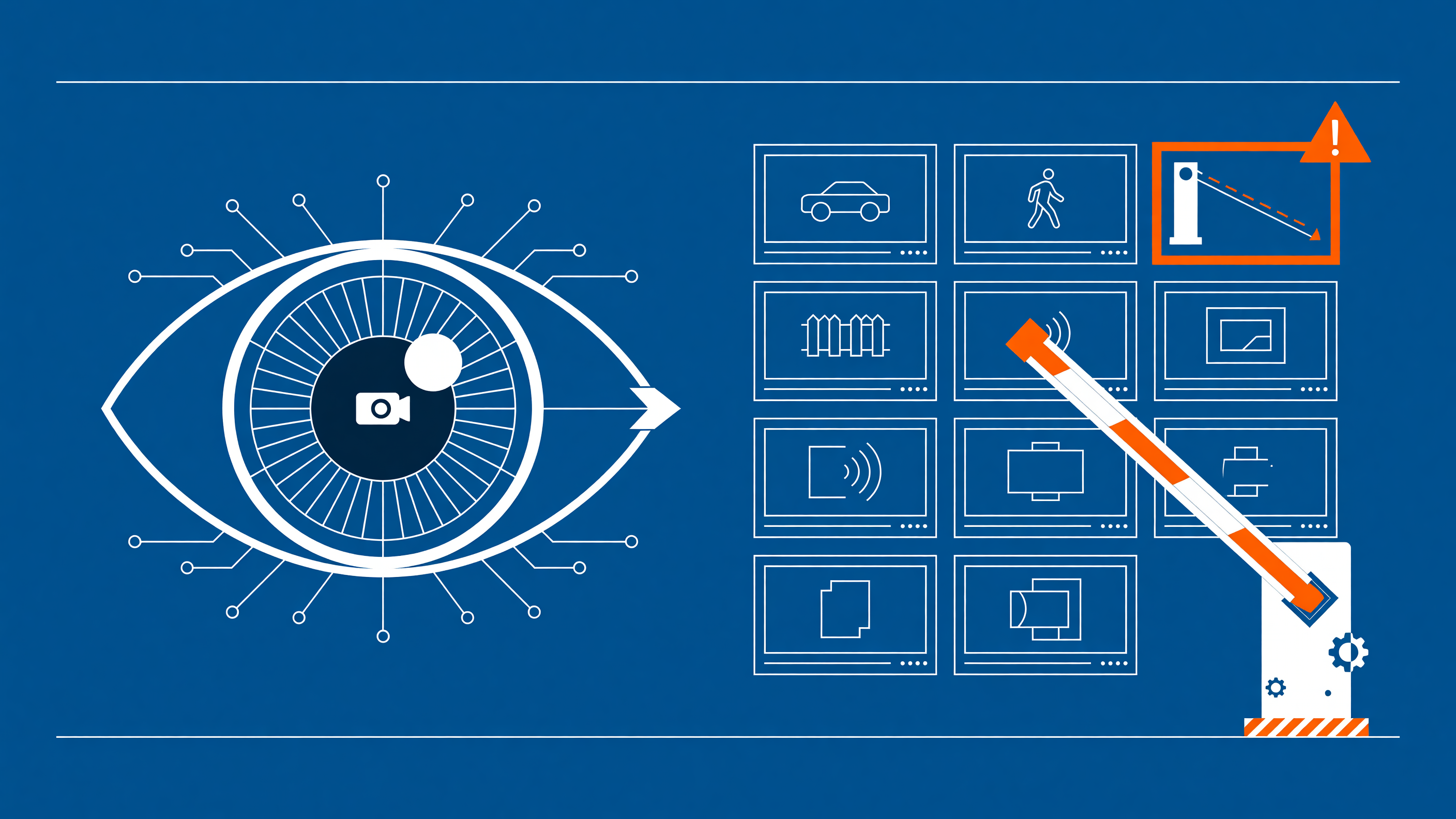
- Smarter video monitoring. Instead of a guard watching a wall of feeds, AI flags events worth attention — a person loitering in a stairwell, a vehicle stopped where none should be, a door forced. A small team reviews exceptions instead of staring at everything.
- Fewer false alarms. Older motion alerts fire on shadows, rain, and headlights. Better models cut the noise, so real alerts don’t get ignored.
- Faster incident review. Searching footage by event — “show me vehicles that entered between 2 and 3 a.m.” — turns hours of scrubbing into minutes.
For facilities running lean on staff, this is a force multiplier: it extends a small team’s attention across more cameras and more sites.
What to be skeptical of
A few honest cautions:
- “AI” as a label. Ask what the model actually does, on what data, and what the real-world accuracy looks like in conditions like yours — not in a demo.
- Privacy and data handling. Plate reads and video are sensitive. Decide retention, access, and purpose deliberately. More cameras and more recognition mean more responsibility, not less.
- Anything that asks you to remove the gate. AI improves the reads; it doesn’t change the fact that a barrier is what physically controls access.
The takeaway
In 2024, the real AI wins in parking aren’t flashy — they’re faster, more reliable plate reads on a gated lane, and security monitoring that lets a small team catch what matters across many cameras. Treat AI as a tool that sharpens access and security within your existing layered, gated design — and ask hard questions of anyone selling it as magic.
Curious where AI genuinely helps your facility? Talk to Parking BOXX about LPR and monitoring that make a small team more effective.