$1B+ REVENUE FOR OPERATORS
 Parking Made Easy®
1 800 518 1230
Request a Quote
Parking Made Easy®
Installing a barrier gate in Houston means working with City of Houston: Houston Permitting Center and Houston Public Works for building, fence and electrical permits; Houston Fire Department (fire code official) for gate approval: fire-access rules, permits, electrical and accessibility requirements all apply*. Parking BOXX is a North American manufacturer of barrier gate systems for parking lots and garages in Houston and the Greater Houston area, and this page covers what to plan for before you build. * Not legal advice for your situation.
What typically applies to a parking gate project in Houston, Texas, with the source for each item.
Houston's amendments to the 2021 International Fire Code allow the fire code official to require gates or barricades across fire apparatus access roads, and they tie installation and upkeep of access control gates to Houston Fire Department Life Safety Bureau Standard No. 04. A security gate across a fire access road needs the fire code official's approval and an approved means of emergency operation, and it must stay operational or be secured open. Electric operators must be UL 325 listed, and gates meant for automatic operation must meet ASTM F2200. The 20-foot minimum road width carries an exception for approved security gates. This summarizes the amendment text the city publishes; confirm the final adopted wording and the current Life Safety Bureau standard with Houston Fire Department before design.
Source: Houston Amendments to the 2021 International Fire Code, Houston Permitting Center
Houston requires a Commercial Fencing Permit for concrete or masonry fences, and for any fence over 8 feet in height, on commercial property. The permit goes through plan review and then inspection, with structural inspections and commercial plan review handled by Houston Public Works at the Houston Permitting Center. Whether a masonry gate pier or a fenced enclosure around a parking facility triggers it depends on its height and material, so settle the scope of any enclosure before applying.
Source: Houston Permitting Center: Commercial Fencing Permit
Gate operators, control power and access-control wiring are electrical work in Houston. Only registered electrical contractors holding the proper master and contractor licenses can apply for the electrical permit, and larger commercial projects may need plan review before approval. Plans are submitted electronically, and an inspection is required; permit and approved plans must be kept on site. Electrical inspections are run by Houston Public Works from the Houston Permitting Center.
Texas made the 2023 National Electrical Code the statewide minimum for covered electrical work effective September 1, 2023, and Houston began reviewing electrical plans against it from that point. Houston's own administrative provisions for the 2023 NEC were adopted by Ordinance No. 2023-9071 and took effect on January 1, 2024. Gate-operator wiring, disconnects and grounding on a Houston project are therefore reviewed against the 2023 NEC as administered by the city.
Source: Houston Permitting Center: 2023 National Electrical Code update
Texas applies the 2012 Texas Accessibility Standards to buildings and facilities, including parking, accessible routes and self-service machines such as pay stations. Under the Elimination of Architectural Barriers law, the owner is responsible for compliance. Projects above the state's cost threshold must be registered with the Texas Department of Licensing and Regulation and reviewed by a Registered Accessibility Specialist, and a local building official can require registration even below it. Pay-station placement, reach height and approach clearance belong in the plan set.
Source: Texas Department of Licensing and Regulation: Elimination of Architectural Barriers
Chapter 251 of the Texas Utilities Code, the state's call-before-you-dig law, requires excavators to use the one-call notification system so member utilities can mark their lines. The statute sets 16 inches as the depth that triggers a call, but the Railroad Commission urges notifying for any excavation regardless of depth. Sawing loops, setting gate foundations and running conduit across a Houston lot all count. Using mechanized equipment inside a marked tolerance zone is among the most common violations the commission sees.
Source: Railroad Commission of Texas: 811 and Texas Damage Reporting Form
* Not legal advice for your situation. Requirements change and vary by site and project. Confirm current rules with City of Houston: Houston Permitting Center and Houston Public Works for building, fence and electrical permits; Houston Fire Department (fire code official) for gate approval before you design or build. This page is a planning guide, not legal or engineering advice.
Houston sits on the Gulf Coastal Plain, and the National Weather Service airport normals show about 52 inches of rain a year, summer highs in the low to mid 90s, and a one-day rainfall record above 16 inches. Gate foundations and operator cabinets here need drainage that handles repeated heavy downpours, and electronics benefit from sealed, ventilated enclosures that cope with heat and humidity together. The region's clay-rich prairie and coastal soils swell and shrink with moisture, so footing depth and bearing assumptions are worth confirming against a site geotechnical report. Freezing is rarely a design driver.
Houston's extreme summer heat — regularly exceeding 100°F with high humidity — requires parking equipment with ventilated electronics, thermal cutoffs, and UV-stabilized polycarbonate components to prevent premature failure.
Houston's size produces many kinds of gated parking: hospital and campus garages in the Texas Medical Center area, downtown and Galleria office and retail structures, apartment communities, hotels, and airport-adjacent lots. Industrial yards, truck terminals and port-area facilities along the ship channel use gates to control vehicles in and out. Event venues and stadium districts manage heavy surges of arrivals, so entry lanes and exit capacity matter as much as the gate itself.
The Texas Medical Center, the world's largest medical complex, generates continuous high-volume patient and staff parking demand that benefit from Parking BOXX LPR cameras and automated access control integrated with hospital credentialing systems.
Gate projects in Houston range from Downtown Houston, Midtown, Greenway Plaza, Energy Corridor and Medical Center District to the lots and garages around George Bush Intercontinental Airport, NRG Stadium, Texas Medical Center.
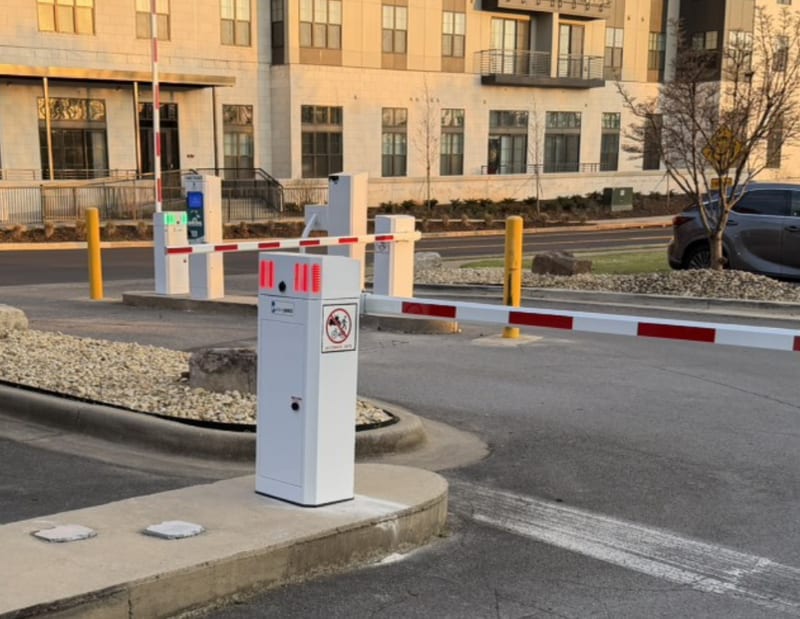
Parking BOXX has 4 installed sites in the Houston market. These photos show real Parking BOXX barrier gate systems installed and operating in Houston, Texas.
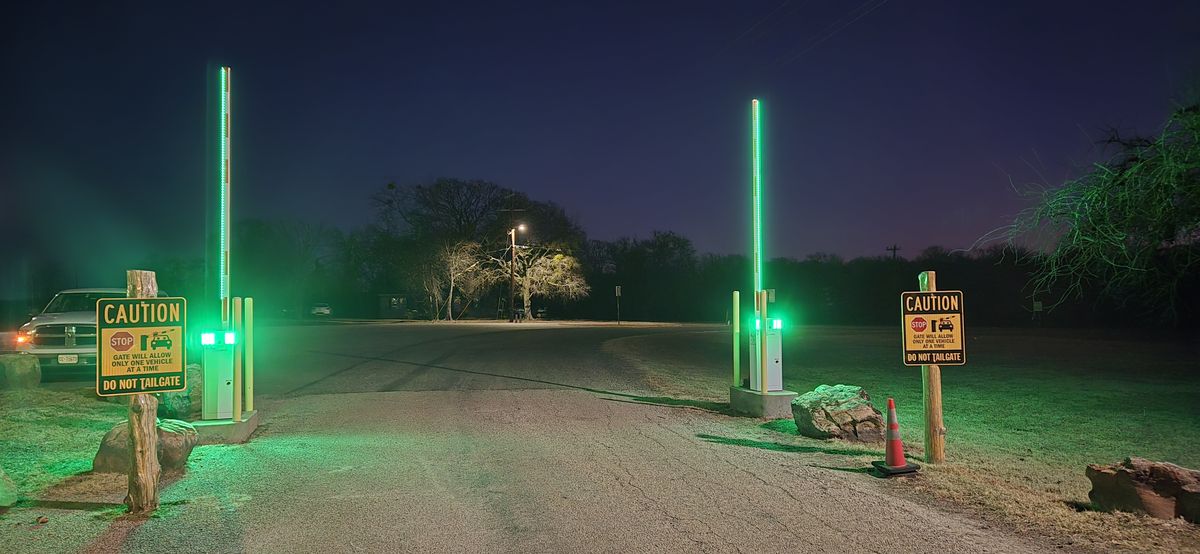
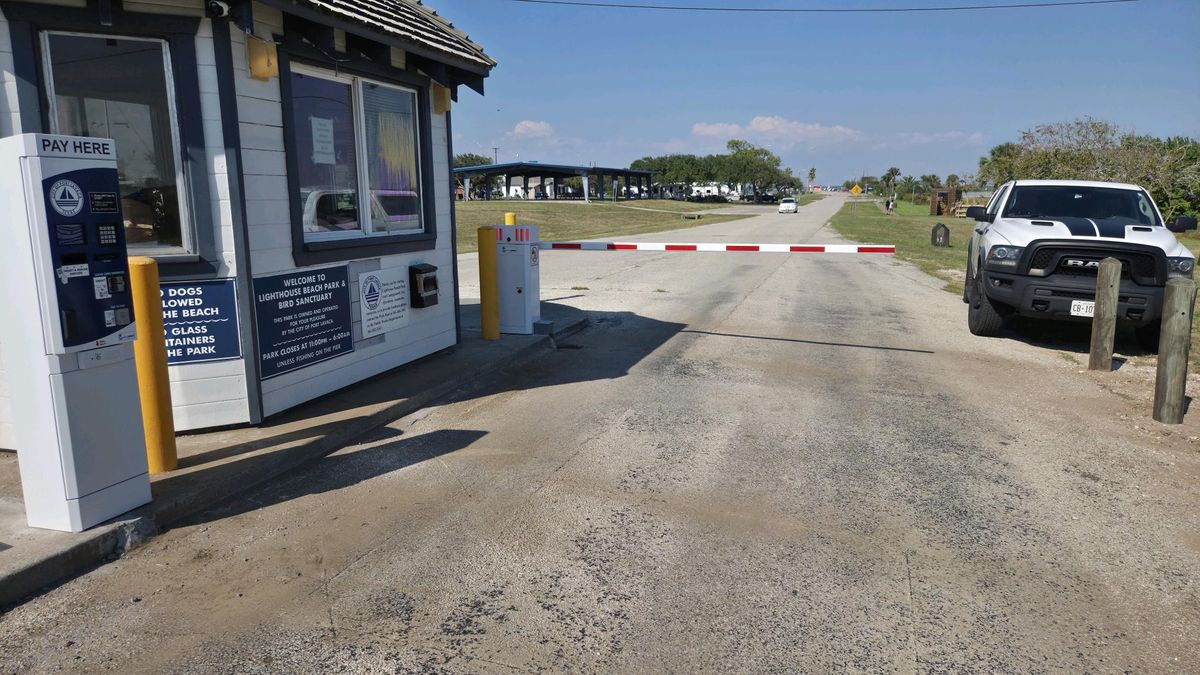
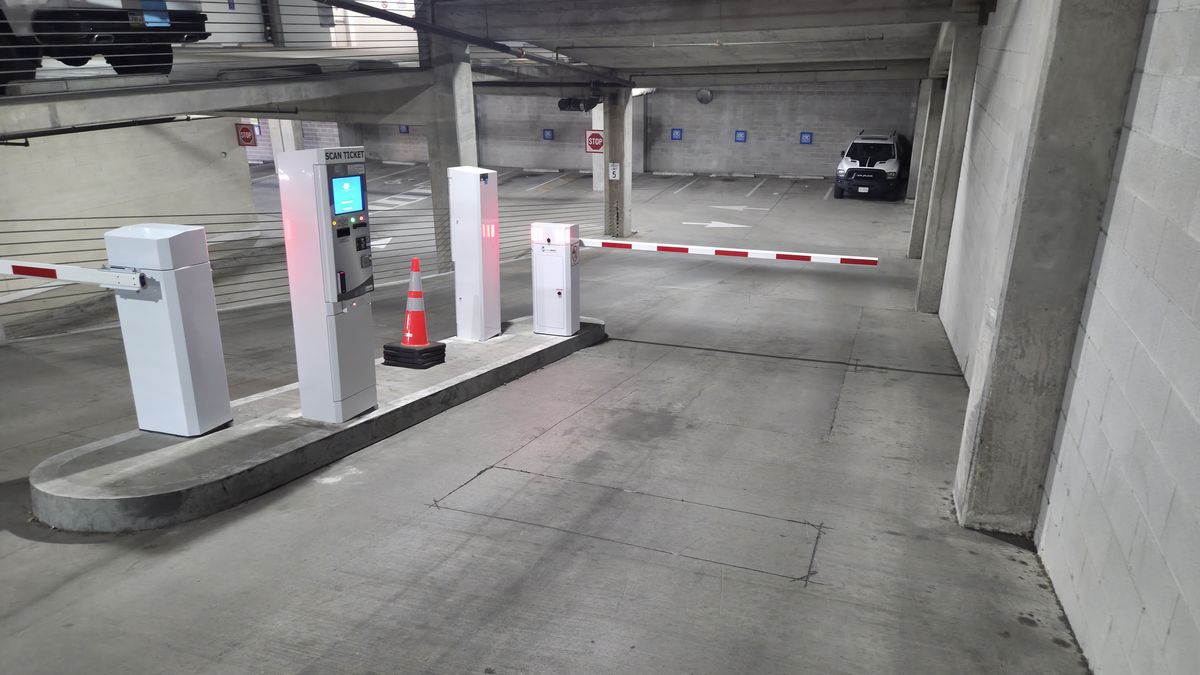
The same manufacturer-built gate is installed in every city. Full specifications are on the barrier gates product page.
Typical budgets: a single gate unit runs $2,000 to $6,000, a complete gated entry and exit system starts around $15,000, and full systems with pay stations and LPR run $40,000 to $150,000+. Request an exact quote for your Houston site.
Usually more than one. The electrical work needs an electrical permit pulled by a registered electrical contractor through the Houston Permitting Center, and a gate or enclosure that qualifies as a commercial fence by height or material needs a Commercial Fencing Permit. If the gate crosses a fire apparatus access road, the fire code official also has to approve it. Requirements vary by project; confirm with the authority having jurisdiction before ordering equipment.
Houston's fire code amendments require approval of the gate and an approved means of emergency operation, and they refer installers to Houston Fire Department Life Safety Bureau Standard No. 04 for access control gates. The gate and its emergency operation must stay working or be secured open. Because details can differ by site and occupancy, review the current standard and ask the fire code official how it applies to your layout.
The 2023 National Electrical Code is the statewide minimum for covered work in Texas, and Houston administers it under its own provisions adopted by Ordinance No. 2023-9071. Separately, the city's fire code requires electric gate operators to be listed to UL 325 and automatic gates to meet ASTM F2200. Your electrician and the city inspector confirm compliance on the job.
Yes. Texas enforces the 2012 Texas Accessibility Standards through the Texas Department of Licensing and Regulation, and owners are responsible for compliance. Larger projects must be registered and reviewed by a Registered Accessibility Specialist. That review looks at things like accessible routes to the machine, reach range and clear floor space. Requirements vary by project; confirm with the authority having jurisdiction and your accessibility reviewer.
Houston facilities, especially those serving mixed-use towers in the Energy Corridor, often need to blend monthly permit access with pay-per-hour transient rates at the same entry points. Parking BOXX barrier gates support simultaneous credential modes — RFID credential for permit holders and ticket-dispensing or pay-in-advance for transients — all managed through CloudEASE without requiring dedicated separate lanes.
* Not legal advice for your situation. Code and permit answers are general; confirm requirements for your site with City of Houston: Houston Permitting Center and Houston Public Works for building, fence and electrical permits; Houston Fire Department (fire code official) for gate approval.