$1B+ REVENUE FOR OPERATORS
 Parking Made Easy®
1 800 518 1230
Request a Quote
Parking Made Easy®
Installing a barrier gate in Kansas City means working with City of Kansas City, Missouri (City Planning and Development Department and the Kansas City Fire Department) under Chapters 18, 26 and 88 of the Code of Ordinances: fire-access rules, permits, electrical and accessibility requirements all apply*. Parking BOXX is a North American manufacturer of barrier gate systems for parking lots and garages in Kansas City and the Kansas City Metro area, and this page covers what to plan for before you build. * Not legal advice for your situation.
What typically applies to a parking gate project in Kansas City, Missouri, with the source for each item.
Kansas City adopted the 2018 edition of the International Fire Code, which the city's own ordinance text describes as the Fire Code in Chapter 26 of the Code of Ordinances. City ordinances amend individual sections, such as the fire alarm provisions in Section 26-907, so the local version can differ from the model code. A gate designer should read the IFC chapter together with the Chapter 26 amendments.
Source: Kansas City Ordinance No. 230424, Chapter 26 Fire Code amendment (City Clerk)
When Kansas City approves development plans, its fire conditions cite IFC 2018 Section 503.6: if an approved security gate spans a fire access road, an approved means of emergency operation must be provided. The same conditions set related access criteria, including an all-weather surface, design for an 85,000 pound fire apparatus axle load, and turning radii of 30 feet inside and 50 feet outside. Gate location needs to respect those dimensions.
Source: Kansas City Ordinance No. 220932, development plan fire conditions (City Clerk)
Chapter 18, Article II of the Code of Ordinances adopts the 2018 International Building Code with local amendments. One amendment adds Section 1809.5.1 and sets the design frost line at 36 inches, and flood loads are redirected to the city's floodplain management chapter. A gate pedestal or footing that is part of a permitted structure is designed against these local provisions rather than the unamended model code.
Source: Kansas City Ordinance No. 220353, Chapter 18 Building Code amendments (City Clerk)
Larger Kansas City projects go through Chapter 88, the zoning and development code, where an approved plan can carry conditions that must be met before a building permit or certificate of occupancy. Conditions in a recent council ordinance include fire hydrant distribution, dead-end access roads longer than 150 feet needing an approved turnaround, and permits for work in the right-of-way. Parking access equipment on a new site is checked as part of that plan.
Source: Kansas City Ordinance No. 220932, Chapter 88 development plan (City Clerk)
Projects that are new or altered on or after March 15, 2012 follow the 2010 ADA Standards for Accessible Design, which apply to state and local government facilities as well as businesses open to the public. Section 208 sets how many accessible parking spaces are needed, and Section 502 covers their dimensions and access aisles. Lane equipment in a Kansas City lot should leave those spaces and the route to them clear.
Source: U.S. Department of Justice, 2010 ADA Standards for Accessible Design
Missouri law, RSMo 319.026, requires excavators to give notice to the notification center at least two working days, and not more than ten working days, before the expected start of excavation. Facility owners then have a short window to mark their lines. Cutting for vehicle loops or digging a gate foundation is excavation, so the locate request is the first step on the schedule, ahead of crews and equipment.
* Not legal advice for your situation. Requirements change and vary by site and project. Confirm current rules with City of Kansas City, Missouri (City Planning and Development Department and the Kansas City Fire Department) under Chapters 18, 26 and 88 of the Code of Ordinances before you design or build. This page is a planning guide, not legal or engineering advice.
Kansas City's building code sets a design frost line of 36 inches, which is deeper than many southern and coastal markets and drives how far a gate pedestal or loop conduit footing must go below grade. The same code sends flood loading to the city's floodplain management chapter, so low-lying sites near creeks and river bottoms need a floodplain check before equipment is placed. Hardware also has to cope with a large seasonal temperature range.
Kansas City sits in Tornado Alley and experiences both extreme summer heat above 100°F and severe winter ice storms that require gate hardware with corrosion-resistant finishes and motors capable of operating in both temperature extremes.
Kansas City's controlled-access parking includes downtown and Power and Light district garages, Crossroads and Plaza-area lots, hospital and medical-center campuses, university sites, hotels, and the airport. Logistics, distribution and manufacturing yards across the metro use gates for truck and employee entries, and apartment communities and event venues manage visitor lanes. Sites span dense urban blocks and wide suburban lots, so lane layout varies widely.
The stadium complex hosting the Kansas City Chiefs and Royals on Truman Sports Complex represents one of the most demanding dual-venue sports parking environments in the country, with back-to-back events requiring rapid vehicle throughput and flexible rate configuration.
Gate projects in Kansas City range from Downtown Kansas City, Power & Light District, Crossroads Arts District, Country Club Plaza and Westport to the lots and garages around Kansas City International Airport, Arrowhead Stadium, Kauffman Stadium.
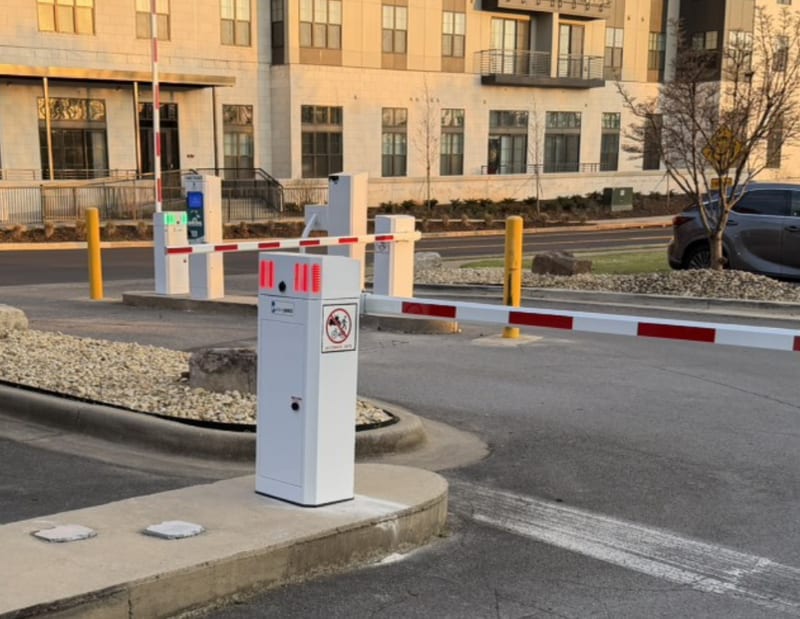
Parking BOXX has 5 installed sites in the Kansas City market. These photos show real Parking BOXX barrier gate systems installed and operating in Kansas City, Missouri.
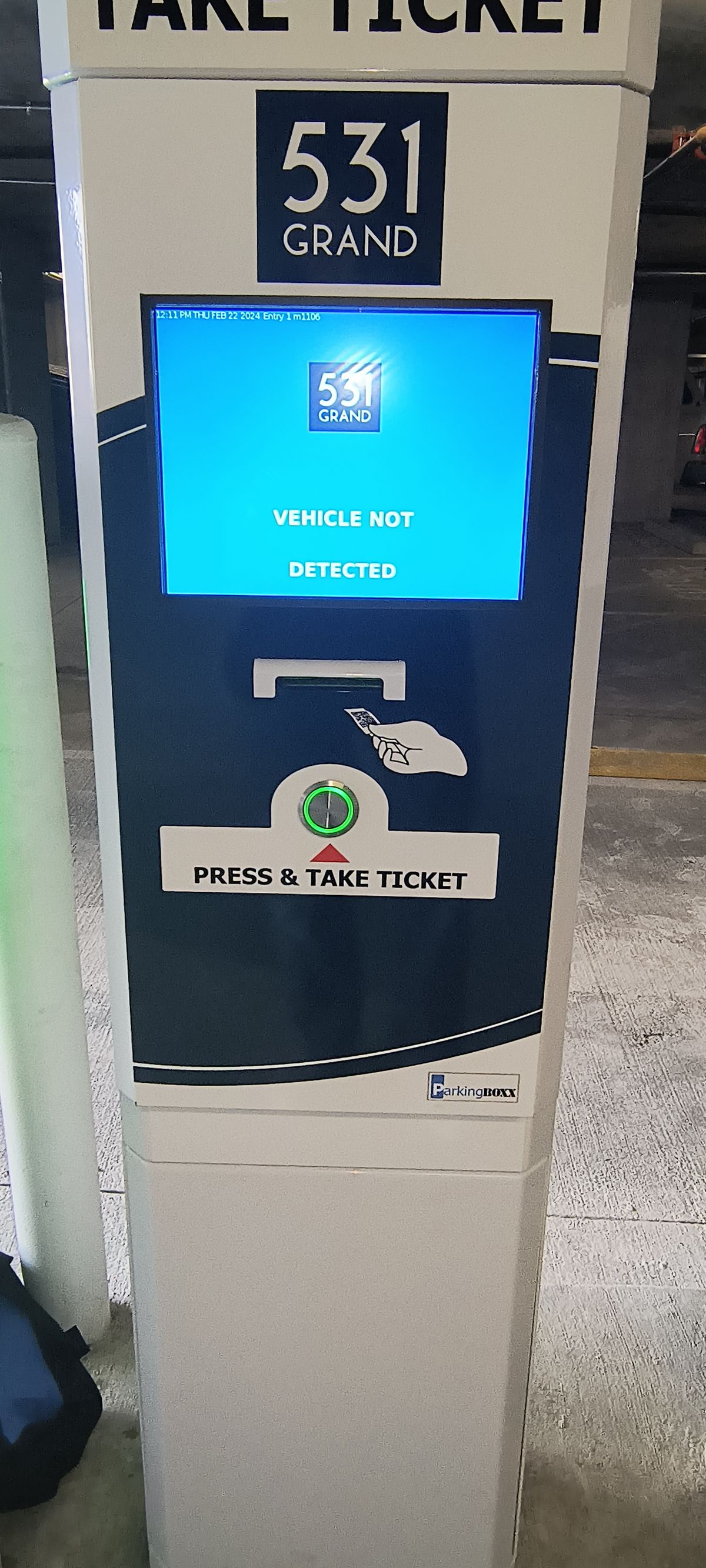
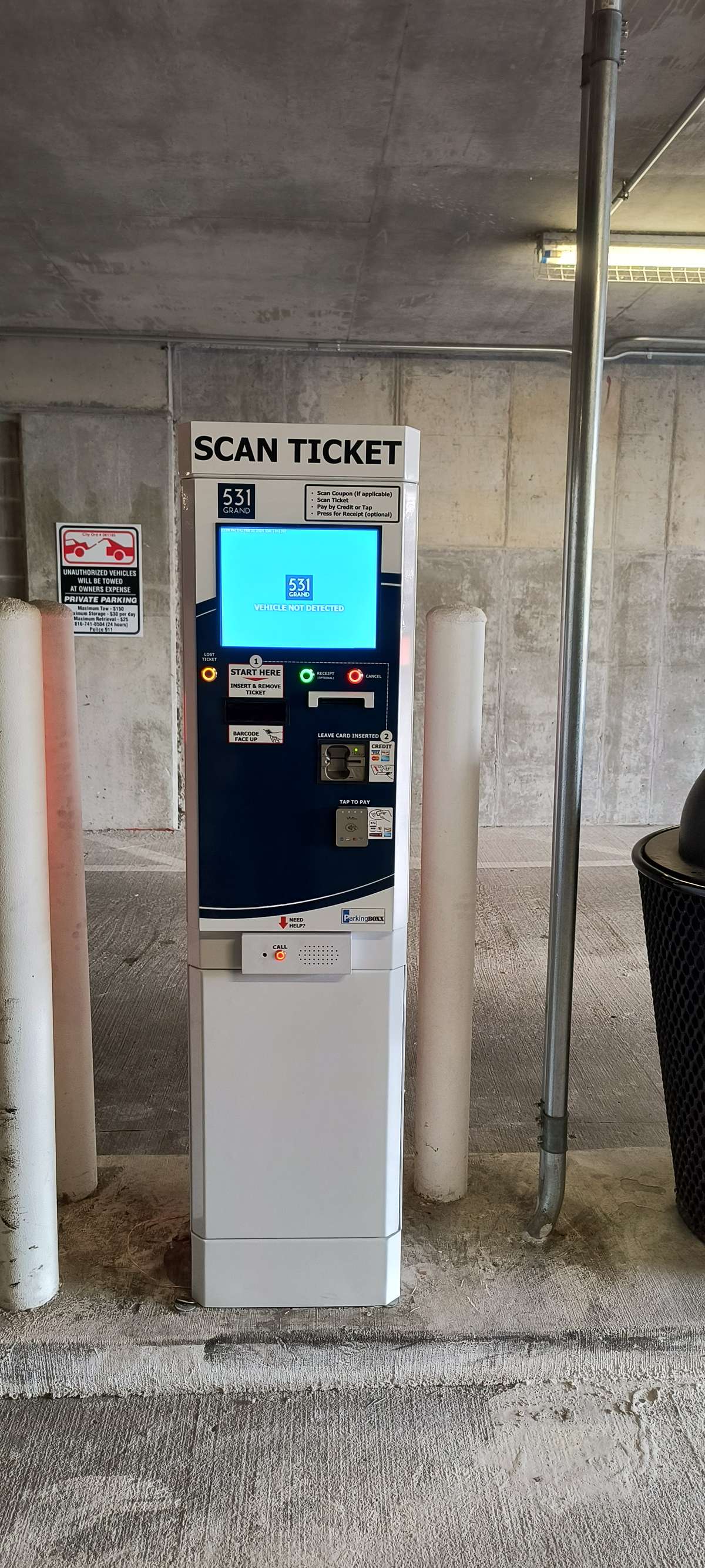
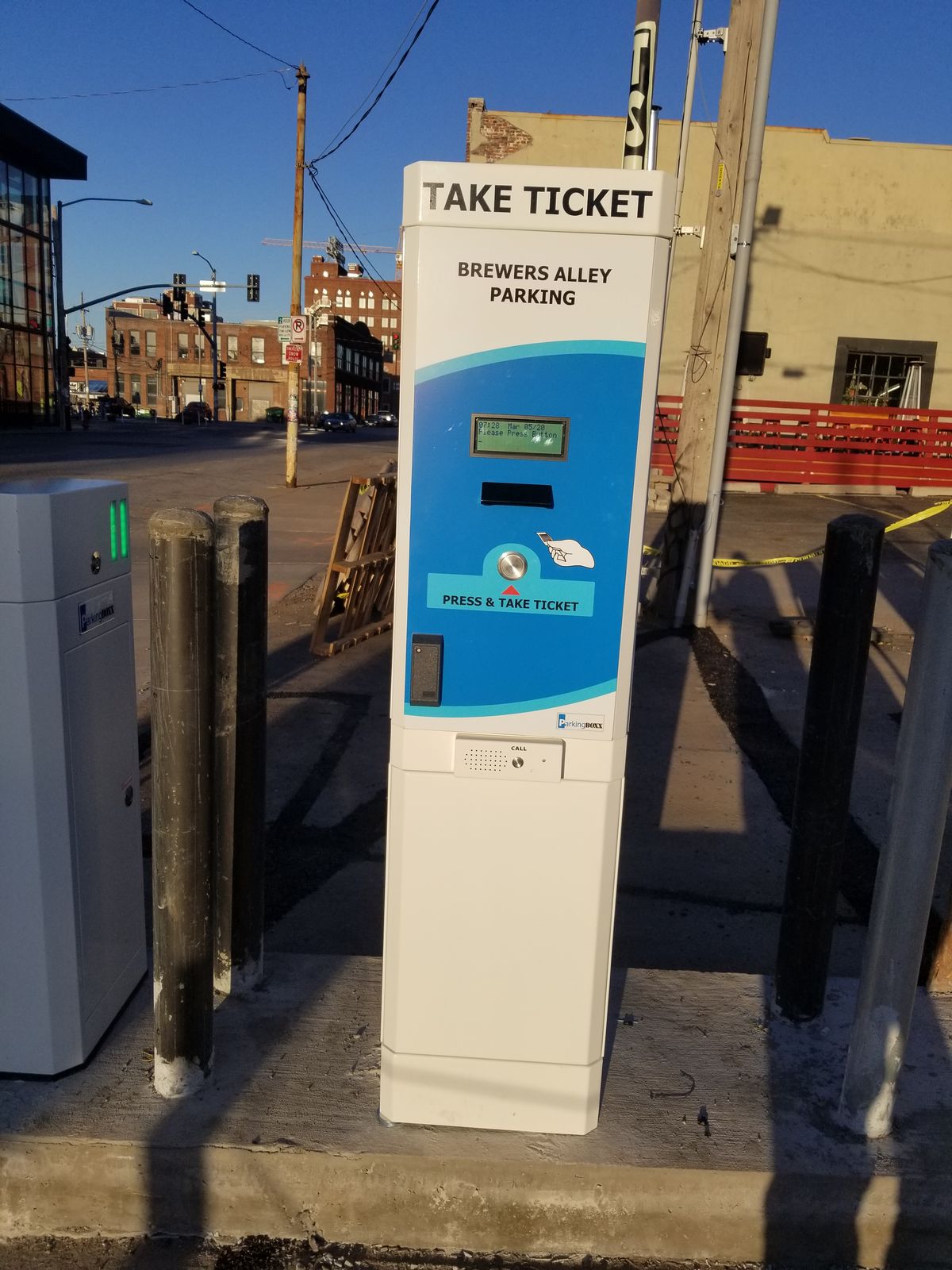
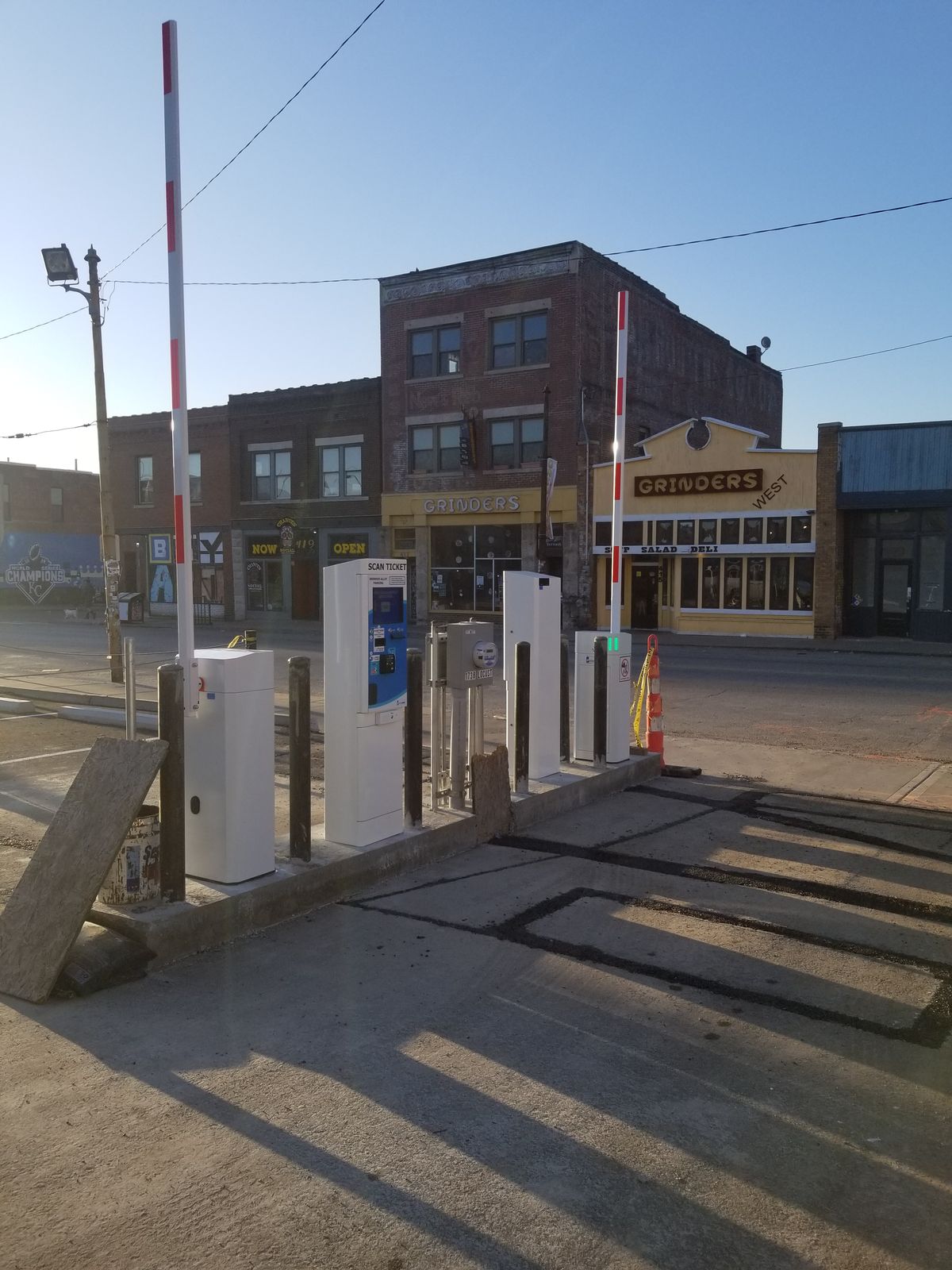
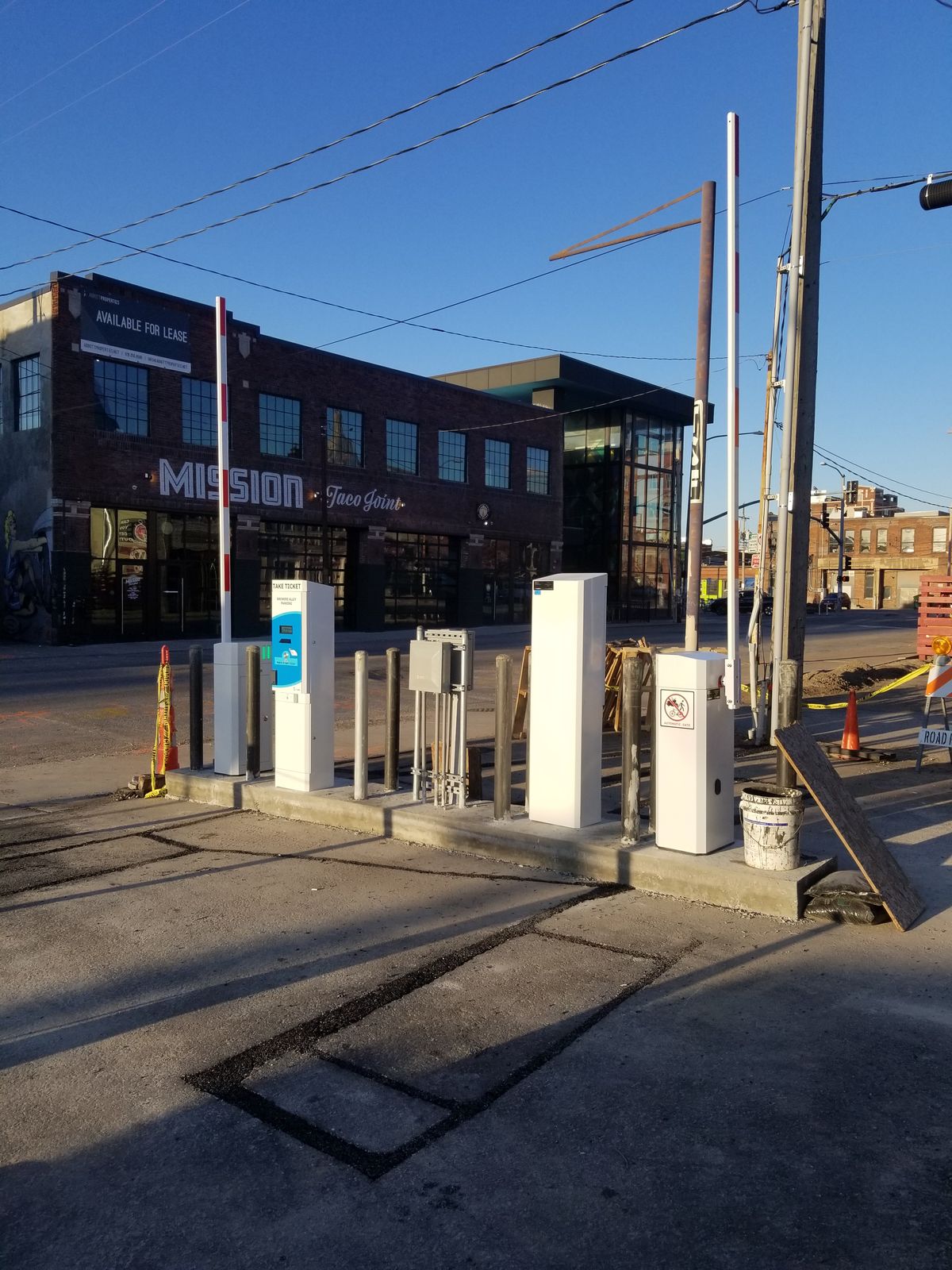
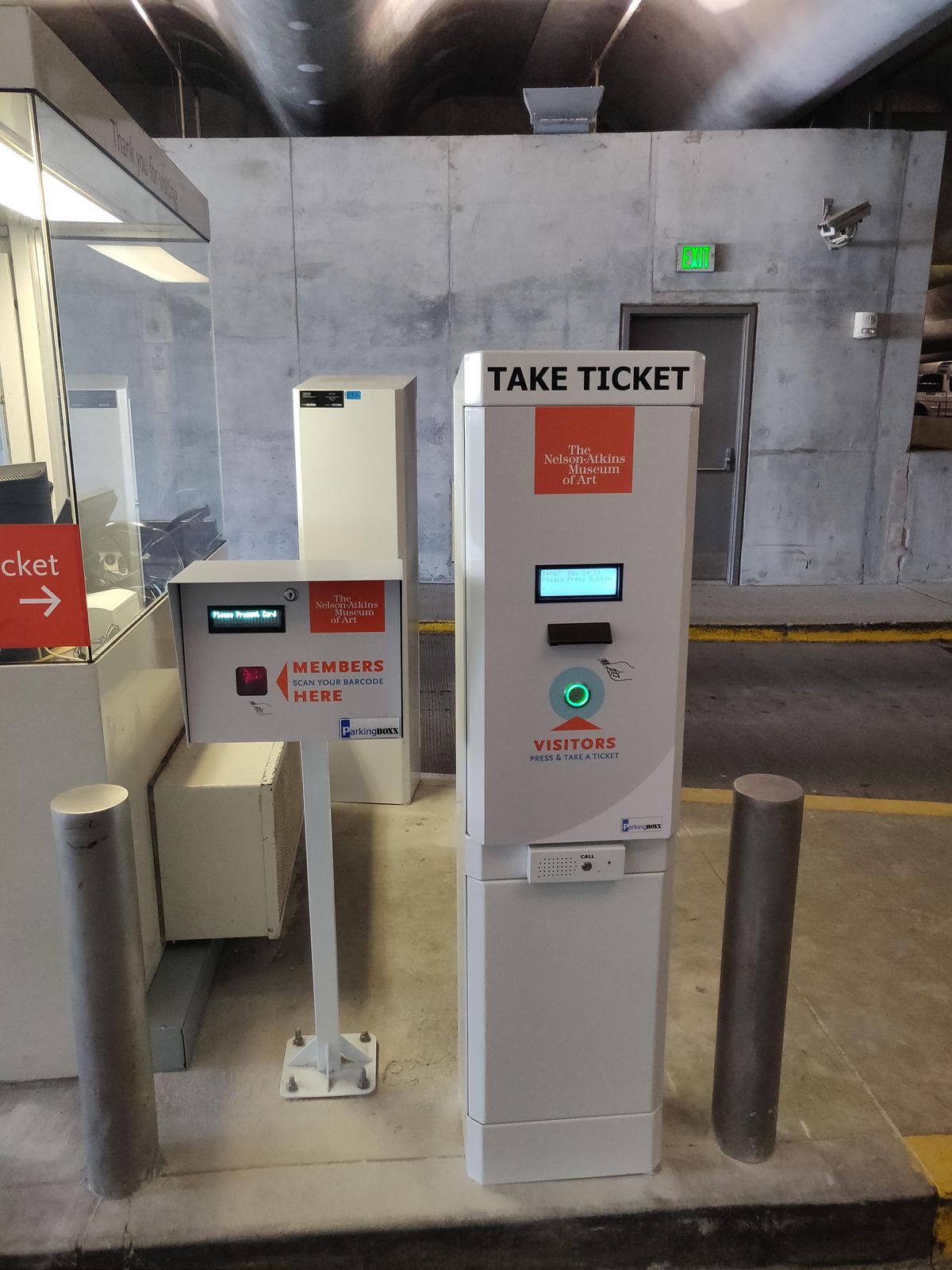
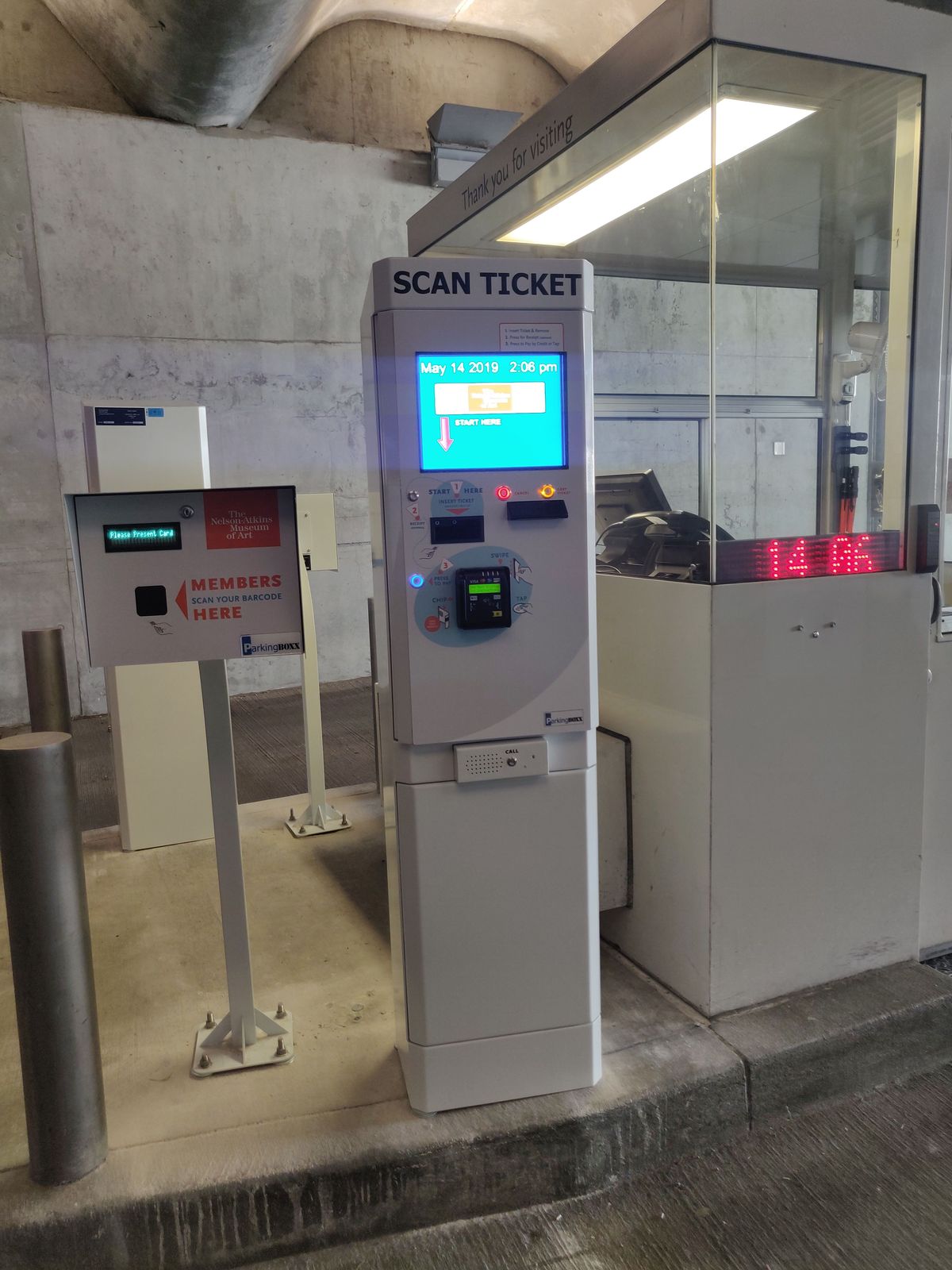
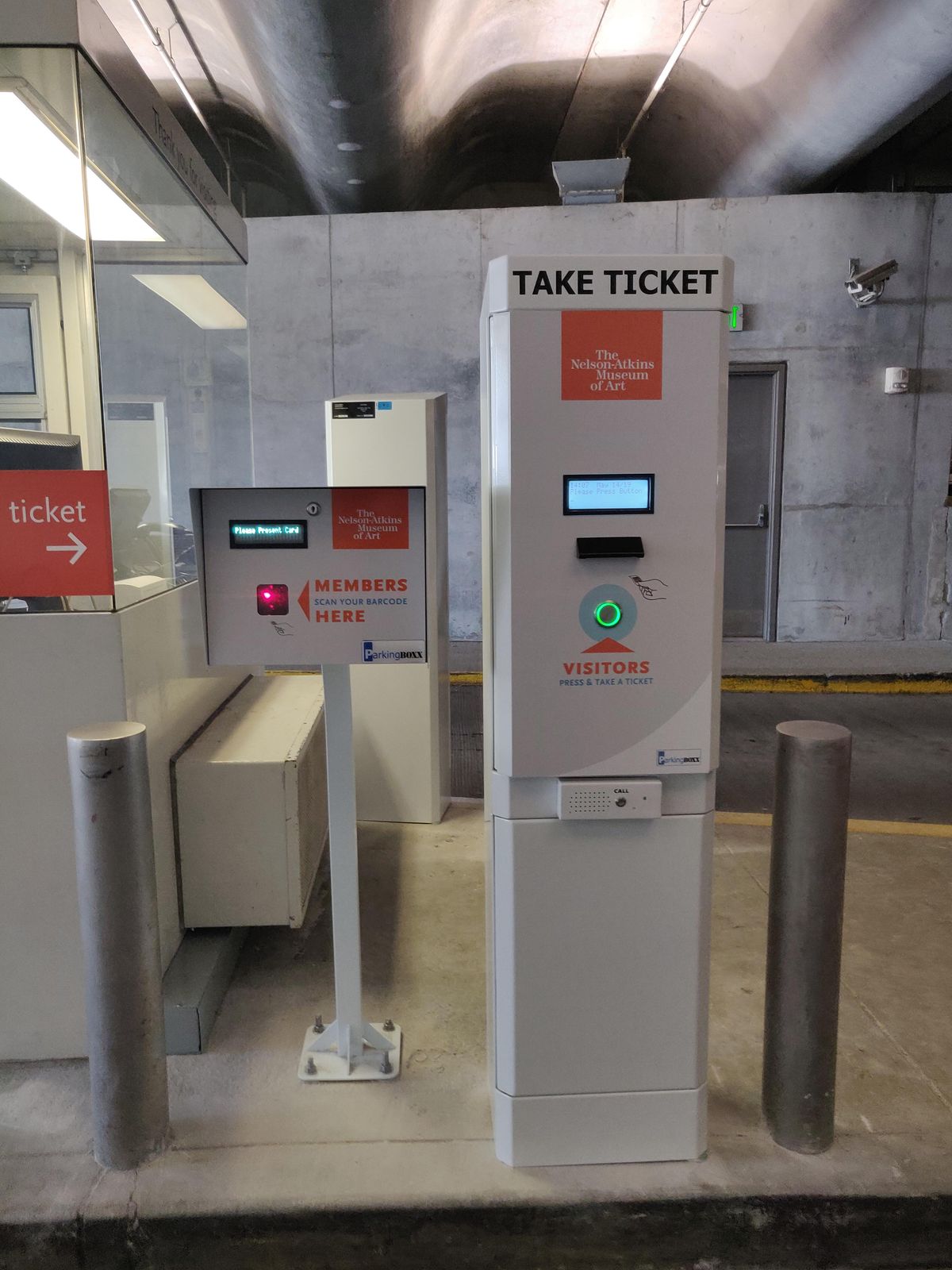
The same manufacturer-built gate is installed in every city. Full specifications are on the barrier gates product page.
Typical budgets: a single gate unit runs $2,000 to $6,000, a complete gated entry and exit system starts around $15,000, and full systems with pay stations and LPR run $40,000 to $150,000+. Request an exact quote for your Kansas City site.
Kansas City adopted the 2018 International Fire Code in Chapter 26 of its Code of Ordinances, with local amendments. City development conditions cite IFC Section 503.6, which says a security gate across a fire access road needs an approved means of emergency operation. Requirements vary by project; confirm with the authority having jurisdiction. Fire access dimensions and gate placement are normally settled during plan review, before equipment is ordered.
The city's amendment to the 2018 International Building Code sets the design frost line at 36 inches in Section 1809.5.1. That is the figure a designer starts from when a footing is part of a permitted structure. The engineer of record and building official decide the actual depth for a given gate. Requirements vary by project; confirm with the authority having jurisdiction.
RSMo 319.026 requires notice to the notification center at least two working days, and not more than ten working days, before the planned start of excavation. Loop saw-cuts and gate foundation holes are covered, so the request should be placed before crews are scheduled and then confirmed against the marks. The marks are only valid for a limited time, so the schedule should be built around the locate response rather than the other way around.
On larger projects, Kansas City's Chapter 88 development plans can carry conditions on fire access, hydrants, turnarounds and right-of-way work that must be satisfied before building permits or occupancy. A gate across a drive that serves fire apparatus is reviewed as part of those fire conditions. Requirements vary by project; confirm with the authority having jurisdiction. Smaller projects may follow a simpler path, which is another reason to ask early.
Shared sports complex parking like Truman Sports Complex requires the ability to activate different lots, rate schedules, and lane configurations depending on which team is playing — or for rare double-header events. Parking BOXX CloudEASE software allows operators to pre-configure event profiles that flip the entire lot network to the correct settings with a single activation. High-cycle barrier gates handle rapid inflow as tens of thousands of fans arrive within 60 to 90 minutes of game time.
* Not legal advice for your situation. Code and permit answers are general; confirm requirements for your site with City of Kansas City, Missouri (City Planning and Development Department and the Kansas City Fire Department) under Chapters 18, 26 and 88 of the Code of Ordinances.