$1B+ REVENUE FOR OPERATORS
 Parking Made Easy®
1 800 518 1230
Request a Quote
Parking Made Easy®
Installing a barrier gate in Washington means working with District of Columbia government (Department of Buildings, DDOT public space permitting, and DC Fire and EMS) with no separate state layer: fire-access rules, permits, electrical and accessibility requirements all apply*. Parking BOXX is a North American manufacturer of barrier gate systems for parking lots and garages in Washington and the Washington DC Metro area, and this page covers what to plan for before you build. * Not legal advice for your situation.
What typically applies to a parking gate project in Washington, District of Columbia, with the source for each item.
The District has no state fire code above it. Its Fire Code is the 2015 International Fire Code as amended by the DC Fire Code Supplement (12 DCMR H). Section 503.6 of the model code says a security gate across a fire apparatus access road must be approved by the fire official and have an approved means of emergency operation that stays operational at all times. Electric operators must be UL 325 listed, and automatic gates must follow ASTM F2200. Check the DC supplement for local changes.
Source: DC Department of Buildings construction codes; IFC 2015 Section 503.6 (UpCodes)
The Department of Buildings issues construction permits in the District. Its alteration and repair permit covers construction or renovation to an existing structure, and commercial spaces need plans stamped by a DC-licensed design professional. The current DC Construction Codes are the 2017 edition, built on the 2015 ICC model codes and the 2014 National Electrical Code. Because the District is adopting newer codes, ask the department which edition applies to your submission.
Source: DC Department of Buildings, Alteration & Repair Permit; Integrated Codes
Anything placed in public space, meaning the roadway, tree spaces, sidewalks and alleys, needs permission from the District Department of Transportation. That matters for gates and pay equipment near a property line, because curb cuts, driveways, bollards and over-height barriers can sit partly in public space. Applications run through DDOT's online permitting system, and items outside the normal permit path can go to the monthly Public Space Committee. Confirm where your property line falls before design.
Source: DDOT Public Space Management
The 2010 ADA Standards for Accessible Design apply to District government facilities and to commercial and public-accommodation parking facilities, and construction started on or after March 15, 2012 must meet them. Parking scoping is in Section 208 and technical requirements in Section 502, while Section 309 covers operable parts such as pay-station controls and call buttons. Because DC has no separate state accessibility code layer to cite, the federal standards are the main reference for gate and payment equipment.
Source: U.S. Department of Justice, 2010 ADA Standards for Accessible Design
The Department of Licensing and Consumer Protection treats a parking facility as a licensed business category. Its Parking Facility license page describes the activity as parking of automobiles, trucks, recreational vehicles, boats and other vehicles as a primary use, and applications run through the DC business portal. An operator adding gates and pay stations to an existing lot should check that the facility's license is current and matches how the lot is run.
Source: DC Department of Licensing and Consumer Protection, Parking Facility license
Miss Utility operates the one-call center for the District at 811 or 202-265-7177. The rule is two business days of advance notice before a digging project, which includes trenching for loops, conduit or a gate foundation. Even small pedestal footings count as excavation. Request the ticket early and keep the marks visible. Federal engineering weather data list no frost depth for the District, so your engineer should set footing depth.
* Not legal advice for your situation. Requirements change and vary by site and project. Confirm current rules with District of Columbia government (Department of Buildings, DDOT public space permitting, and DC Fire and EMS) with no separate state layer before you design or build. This page is a planning guide, not legal or engineering advice.
Engineering weather data for Reagan National Airport show a 0.4 percent summer design high of 95 F, a 99.6 percent winter design low of 18 F, a 50-year design gust of 90 mph and a 100-year rain rate of 3.3 inches an hour. The station sits at about 15 feet of elevation and averages 36 freeze-thaw cycles a year. Low ground near the Potomac and the Washington Channel is exposed to tidal flooding, which the National Weather Service says happens more often than freshwater flooding there, so ground-level cabinets and operators on the waterfront should be raised and sealed.
Washington DC experiences nor'easter snowstorms, significant summer humidity, and occasional ice storms that challenge barrier gate mechanisms and accelerate rust on unprotected hardware in above-ground garages.
In the District, gated parking control is concentrated in downtown and Capitol Hill office and hotel garages, university and medical campuses, and mixed-use developments near the Navy Yard, NoMa and Union Station. Embassy and institutional properties along Massachusetts Avenue and in Georgetown often need access control that fits tight street frontage. Event and visitor parking around the National Mall and the waterfront adds seasonal peaks, and residential buildings use gated garages under the alley and curb-cut limits of dense blocks.
DC's concentration of federal agency campuses, embassy complexes, and GSA-managed facilities creates demand for high-security access control with detailed audit logging — capabilities built into Parking BOXX systems and surfaced through CloudEASE's compliance reporting.
Gate projects in Washington range from Downtown DC, Capitol Hill, NoMa, Foggy Bottom and Navy Yard to the lots and garages around Ronald Reagan Washington National Airport, Capital One Arena, MedStar Washington Hospital Center.
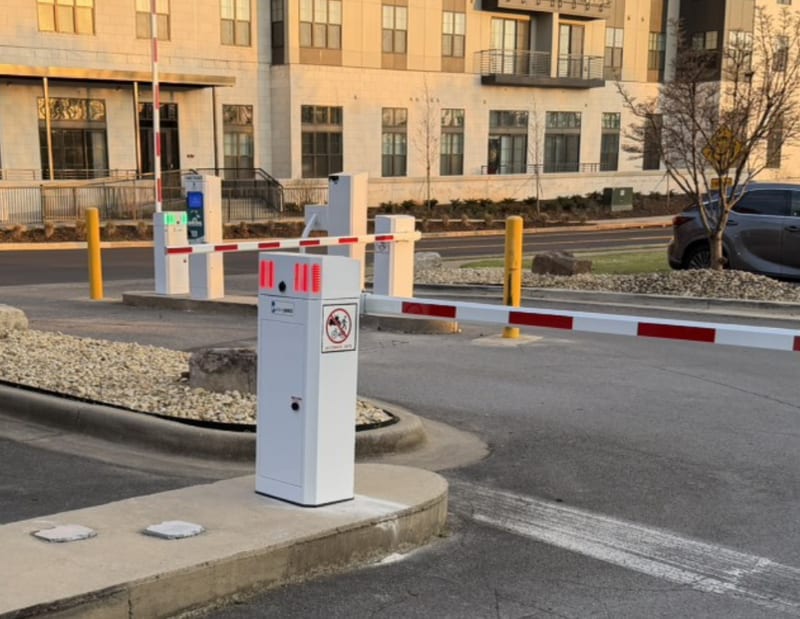
Parking BOXX has 2 installed sites in the Washington market. These photos show real Parking BOXX barrier gate systems installed and operating in Washington, District of Columbia.
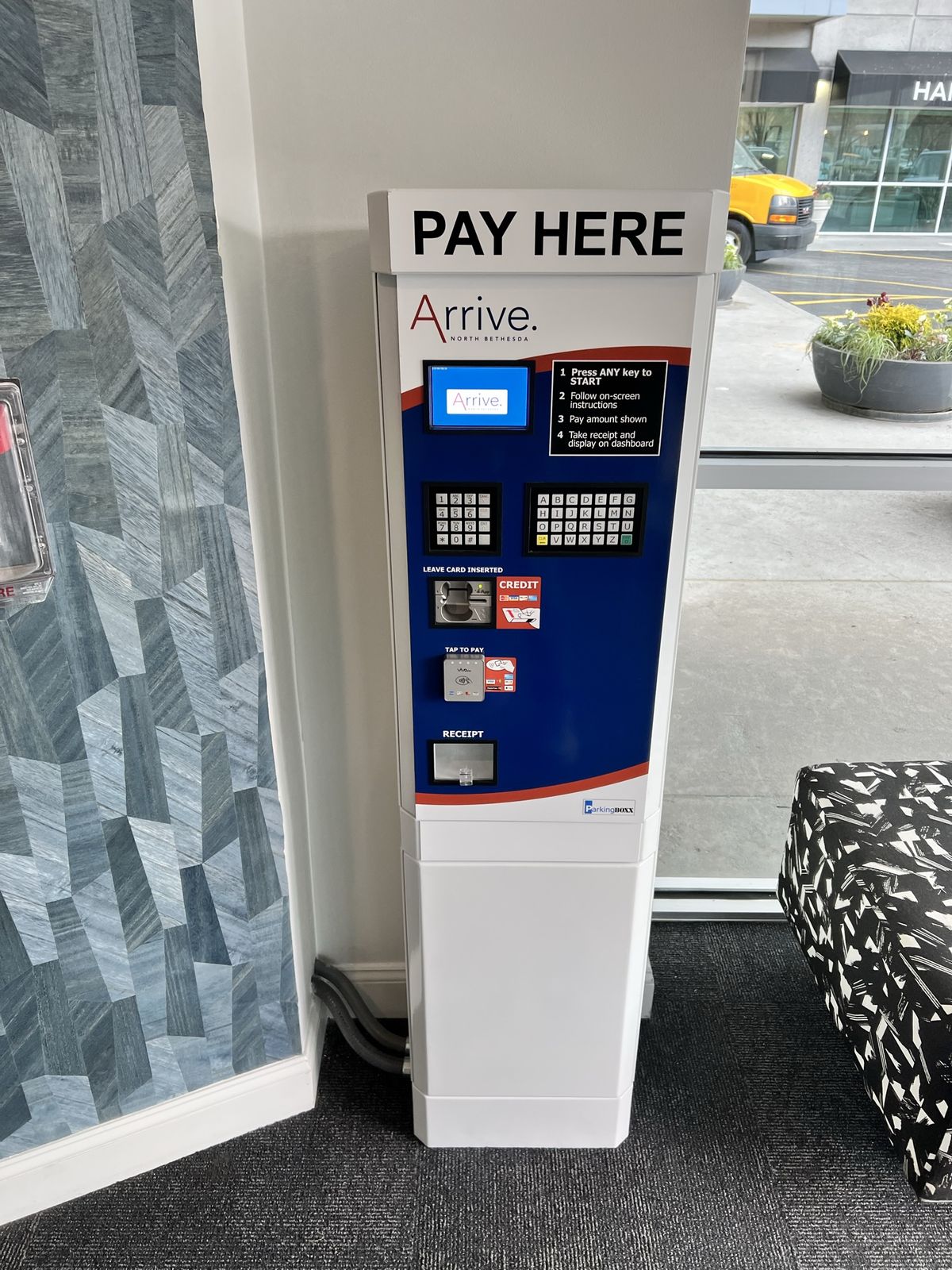
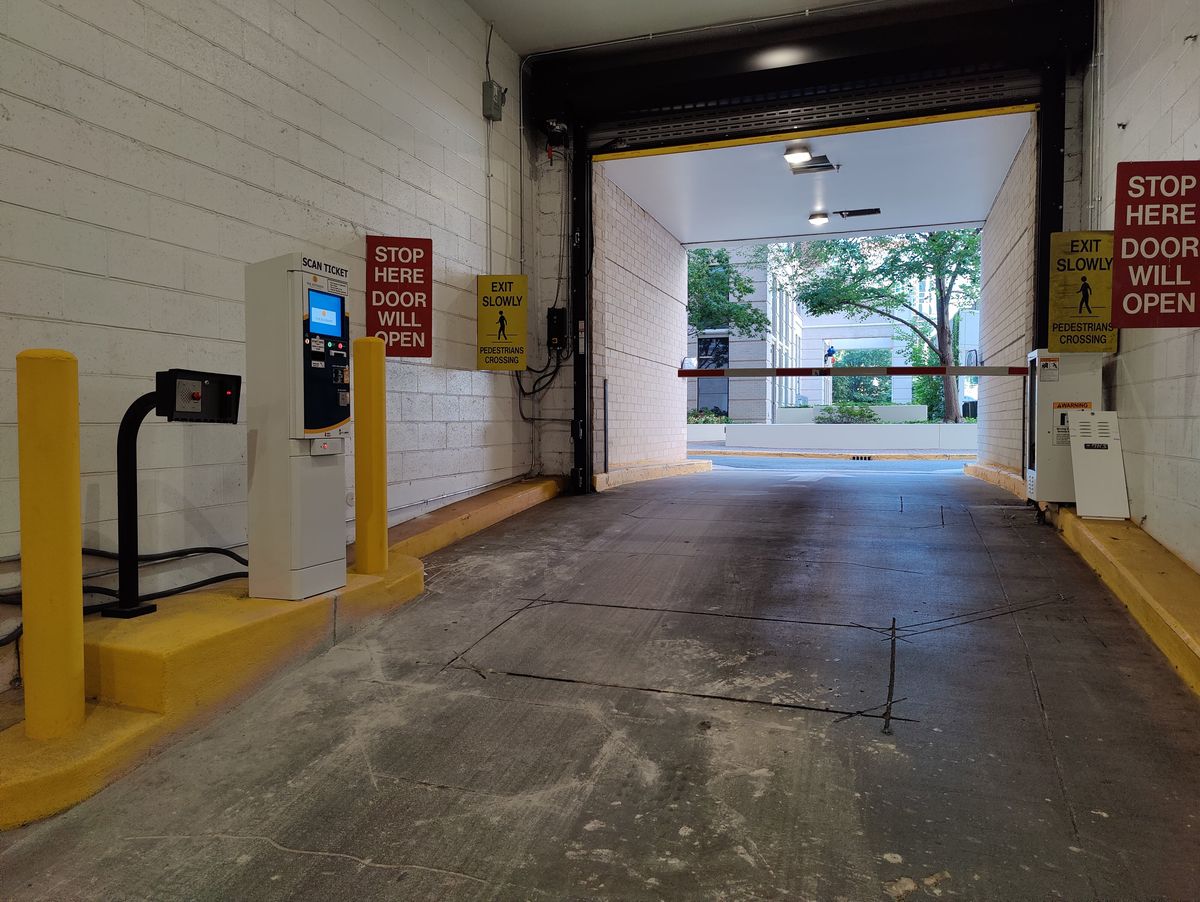
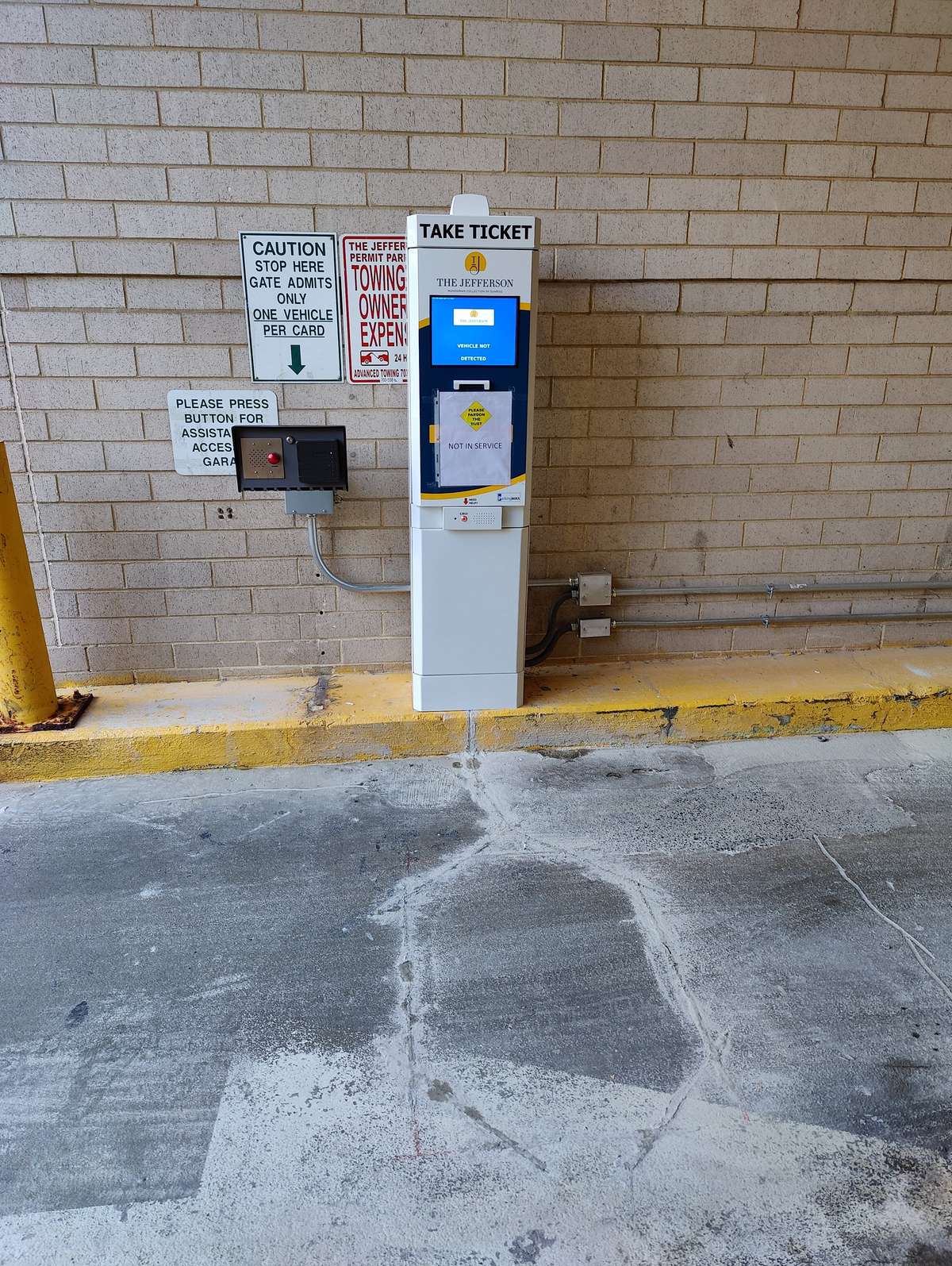

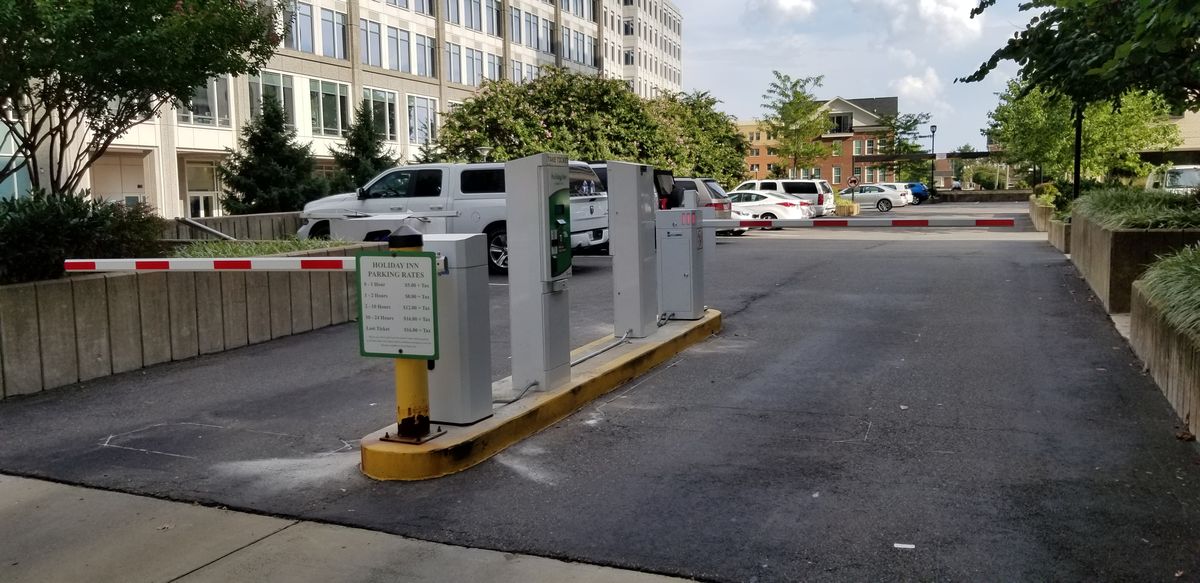
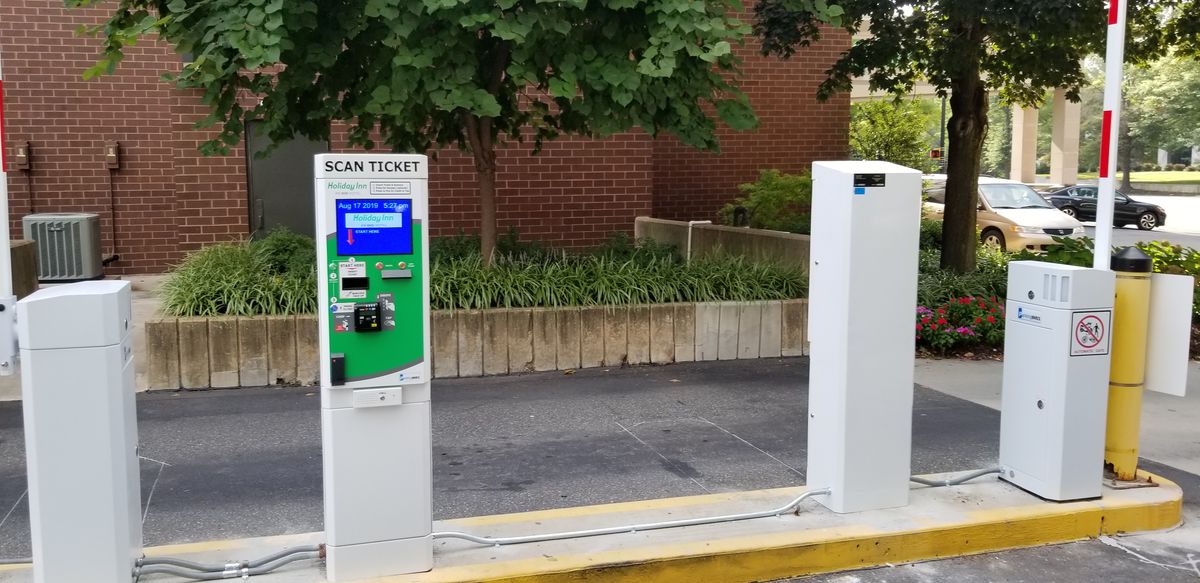
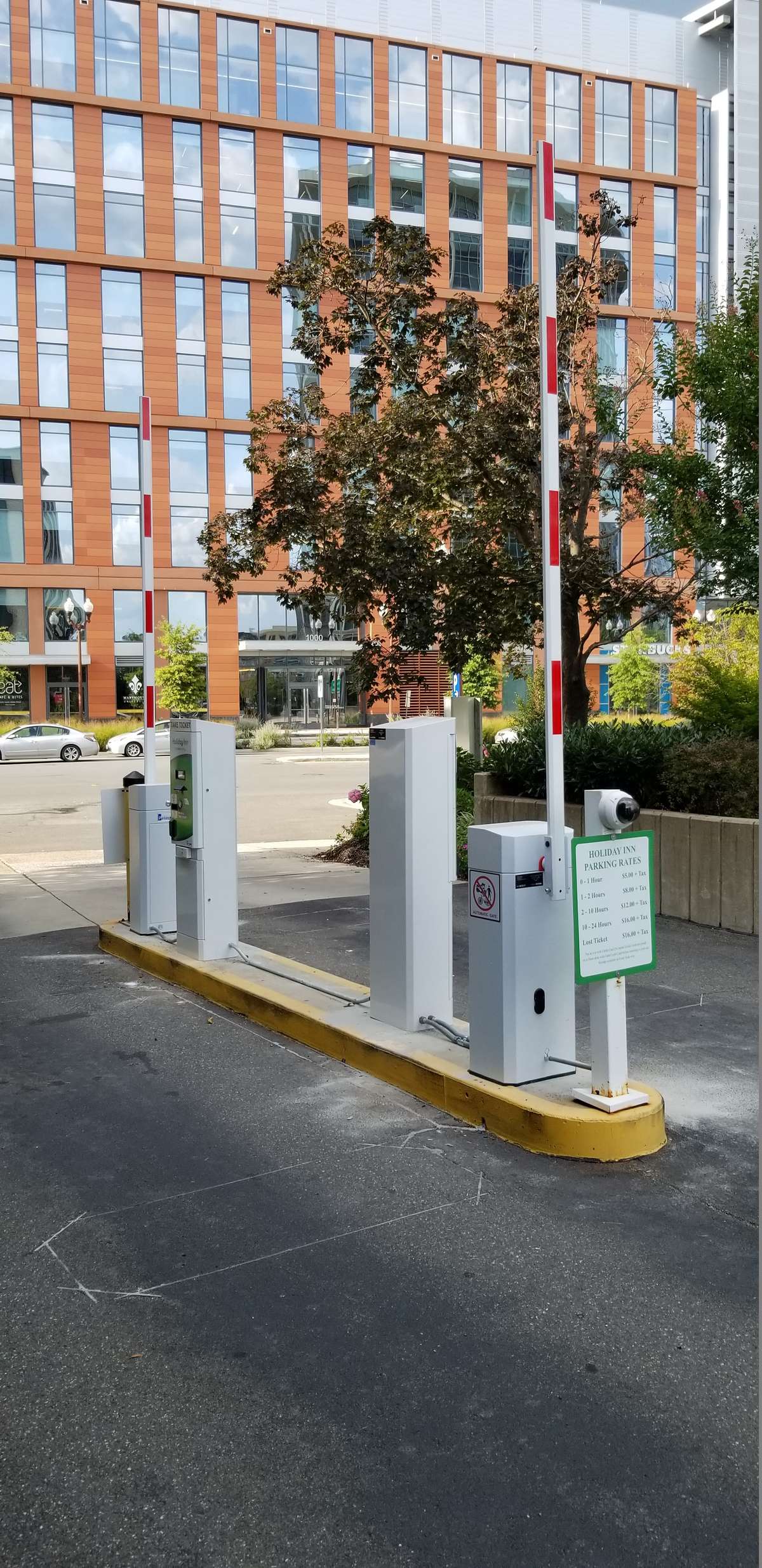
The same manufacturer-built gate is installed in every city. Full specifications are on the barrier gates product page.
Typical budgets: a single gate unit runs $2,000 to $6,000, a complete gated entry and exit system starts around $15,000, and full systems with pay stations and LPR run $40,000 to $150,000+. Request an exact quote for your Washington site.
No. The District is a single jurisdiction, so there is no separate state layer. The DC Fire Code, the 2015 International Fire Code amended by the DC Fire Code Supplement, is the one fire rule to follow. The model code requires a security gate across a fire apparatus access road to be approved by the fire official with an approved means of emergency operation. Confirm details with the authority having jurisdiction.
If any part of the work, such as a curb cut, driveway apron, bollard or barrier, sits in public space, DDOT permission is required. Public space means the roadway, tree spaces, sidewalks and alleys outside the private property line. Equipment fully inside the lot is handled through the Department of Buildings. Requirements vary by project; confirm with the authority having jurisdiction, and verify the property line first.
The DC Construction Codes currently listed by the Department of Buildings are the 2017 edition, built on the 2015 ICC codes and the 2014 National Electrical Code. The District is working toward adopting newer codes, so ask the department which edition governs your permit. Separately, the model fire code calls for electric gate operators to be listed to UL 325 and automatic gates to follow ASTM F2200.
The District requires two business days of notice through Miss Utility, reachable at 811 or 202-265-7177, before digging projects. That includes small excavations for loop detectors, conduit and equipment pedestals. Underground lines are dense in the city, so submit the request as soon as the footprint is set and confirm the marks before work starts. Your contractor and engineer set the footing depth for the site.
Federal facilities and cleared contractor campuses in DC require detailed access audit trails, credential-level entry restrictions, and the ability to revoke access instantly when a clearance changes. Parking BOXX access control systems log every credential read with timestamp and lane ID, and CloudEASE allows security administrators to deactivate individual credentials remotely in real time — meeting the audit and access revocation requirements common in federal facility security plans.
* Not legal advice for your situation. Code and permit answers are general; confirm requirements for your site with District of Columbia government (Department of Buildings, DDOT public space permitting, and DC Fire and EMS) with no separate state layer.