
Parking System Intercoms
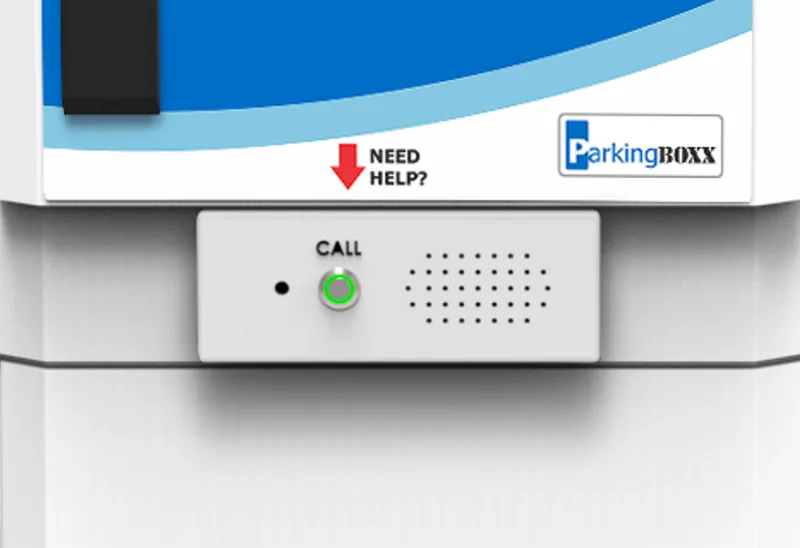
Parking BOXX intercoms connect drivers at entry and exit lanes to remote support staff who can communicate back and release the gate from a CloudEASE dashboard — without dispatching an attendant to the lane.
IP-based audio over the facility data network. No dedicated phone lines. No per-call charges. Full integration with CloudEASE event logging and remote gate control. Parking Made Easy®.
How Parking Intercoms Support Automated Facilities
Automated parking facilities eliminate the need for a permanent attendant at every lane. But automated equipment occasionally creates situations that require human intervention — a parker with an unusual credential, a card payment failure, a lost ticket, or a first-time visitor who is unfamiliar with the equipment. An intercom at the lane is the safety net that keeps these situations from becoming lane blockages.
When a driver presses the intercom button, the call routes to a remote support operator. The operator hears the driver, assesses the situation through the CloudEASE dashboard — viewing the lane camera feed, the transaction record, and the gate status — and either guides the driver through a resolution or releases the gate directly from the dashboard. The entire interaction often takes under a minute.
Facilities that previously kept an attendant on-site full-time to handle these exception cases can transition to a remote support model. A single support operator can monitor multiple facilities simultaneously because they are responding to intercom calls rather than standing at a gate waiting for one to occur.
The intercom also serves a safety function. A driver who feels unsafe in a parking structure has a clear way to reach a live person immediately. This is particularly important for hospital, campus, and mixed-use facility parking where the parker population includes people in vulnerable situations.
IP-Based Technology and CloudEASE Integration
Parking BOXX intercoms use IP-based audio communication over the facility's existing data network. There is no need to install dedicated analog telephone lines at each intercom location. The intercom connects to the same network infrastructure that every other Parking BOXX device uses, reducing both installation complexity and ongoing telecommunications costs.
Call routing is configurable in CloudEASE. Calls from a specific lane can be routed to a designated support number, a call center, or a group of staff members with overflow routing. After-hours calls can route differently than business-hours calls. If the primary recipient doesn't answer within a set time, the call escalates to an alternate contact. These routing rules are managed in software without hardware changes.
Every intercom call is logged in CloudEASE with the lane ID, call timestamp, duration, and the operator who responded. If a gate was released during the call, that action is logged against the same call record. This creates a complete audit trail for every intercom interaction — useful for identifying patterns in where and when parkers need assistance, and for reviewing specific incidents when needed.
Installation Locations and Use Cases
Every entry and exit lane in a gated parking system benefits from an intercom. Lane-mounted intercoms are integrated into the same pedestal or enclosure as the entry ticket dispenser, exit reader, or pay station — minimizing the number of separate devices in the lane and reducing the parker's cognitive load. One button press initiates support contact; the same screen they were just using confirms the connection.
Pay-on-foot kiosk locations need intercoms for situations where the kiosk itself is operating correctly but the parker is confused or their ticket is unreadable. The intercom gives the parker a path to resolution without having to find a staff member or call a posted phone number.
Standalone help point intercoms are mounted in parking structures at stairwell entrances, elevator lobbies, and pedestrian areas where a driver may need assistance outside of a lane. These units are weatherproof and vandal-resistant for enclosed structure environments.
Hotels, hospitals, and mixed-use facilities with complex parking configurations use intercoms to handle the exception cases that arise from their specific credential and validation workflows. A hotel guest whose room key isn't opening the parking gate can press the intercom, connect with a front desk agent, and have the issue resolved in real time rather than leaving their car in the lane to go find staff inside.
Frequently Asked Questions
What are parking system intercoms used for?
Are Parking BOXX intercoms IP-based?
Can the intercom operator release the gate remotely?
Where are parking intercoms typically installed?
Can all call buttons ring the same number, or does each need its own?
How is after-hours or escalation call routing handled?
When support answers, can they tell which lane or station is calling?
What does our IT team need to plan for?
Are intercom calls recorded?
Are Parking BOXX intercoms ADA accessible?
What happens during a power or internet outage?
Is the intercom suitable for outdoor or noisy locations?
Add Intercoms to Your Parking System
Parking BOXX intercoms are part of the complete system — designed to work with Parking BOXX gates, pay stations, and CloudEASE from the start. One manufacturer, one support contact, no third-party integration required. Get a quote for your facility. Parking Made Easy®.