
Parking Validation Machines
Parking BOXX manufactures the Validation BOXX — a digital parking validation machine that replaces paper stickers, stamps, and coupons with trackable validation codes managed through CloudEASE. No paper, no fraud, no guesswork.
What Is Parking Validation
Parking validation is a discount or free parking benefit that a business provides to its customers and visitors. When someone parks in a paid lot or garage, the business they visit validates their parking — meaning the business covers part or all of the parking fee as a courtesy.
Validated parking is standard practice at medical offices, restaurants, retail stores, hotels, and office buildings where attracting visitors depends on making parking affordable. Traditional parking validation uses paper stickers, ink stamps, or printed coupons — but this process creates problems: stickers are easy to copy and share, there is no way to track how many are issued, and there is no budget control to prevent overuse.
Validation is also a tenant retention and business development tool. Anchor tenants in mixed-use developments expect validated parking as part of their lease. Medical office buildings negotiate patient validation as a standard term. Hotels offer validated parking as part of event packages. If your parking system cannot support these agreements cleanly and with full accountability, you are at a negotiating disadvantage before the conversation starts.
For operators of facilities adjacent to commercial districts, validation partnerships with nearby businesses drive utilization. A customer who knows their parking is validated at the coffee shop, the pharmacy, and the barbershop is more likely to choose your garage over street parking. The validation program creates mutual benefit: businesses get a parking incentive to offer customers, and the operator gets higher utilization and more consistent revenue.
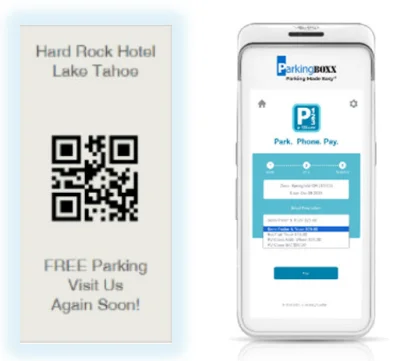
Digital parking validation eliminates every one of these problems. Instead of a sticker, the tenant generates a unique validation code through the CloudEASE portal. The code is time-limited, tied to a specific tenant profile, and tracked in real time. When the visitor enters the code at the parking pay station or kiosk, CloudEASE applies the correct discount and logs the transaction.
How Digital Validation Works
The digital parking validation process replaces manual sticker handling with a self-service workflow that tenants and visitors complete on their own — no phone calls, no paper, no manual overrides.
Tenant Generates a Code
The tenant — a restaurant manager, medical receptionist, or office administrator — logs into the CloudEASE portal from any browser on any device. They select their validation profile and generate a code as a printed slip, SMS, or QR code.
Visitor Parks Normally
The visitor enters the parking facility, takes a ticket or passes through LPR, and parks. Nothing changes about the entry process. The validation code is delivered to the visitor at the tenant's front desk.
Code Entered at Payment
Before exiting, the visitor goes to the pay station, kiosk, or exit terminal and enters the validation code. CloudEASE looks up the code, verifies it has not been used, and applies the discount for that tenant's profile.
Discount Applies Automatically
The exit fee adjusts based on the validation type — percentage off, flat rate reduction, time credit, or full free parking. CloudEASE records the transaction and deducts it from the tenant's monthly validation budget.
Validation Types and Discount Levels
Every business has different validation needs. CloudEASE handles all configurations through unlimited validation profiles — each tenant gets independent settings and monthly budget controls.
Percentage-Based Discounts
Set a percentage off the total parking fee — 25%, 50%, 75%, or 100%. The discount applies to whatever the visitor owes at exit. Popular with retail stores offering partial validation as a customer courtesy.
Flat Rate Reductions
Subtract a fixed dollar amount from the parking fee. A $5 validation on a $12 fee means the visitor pays $7. Useful for businesses that want to offset a predictable portion of the parking cost regardless of duration.
Time-Based Credits
Give visitors a set number of free hours. The first 2 hours are validated, and only parking time beyond that threshold is charged. The most popular configuration for restaurants and medical facilities where visit duration is predictable.
Full Free Parking
The validation covers the entire fee regardless of duration. Used for VIP guests, building employees, or high-value customer visits where the business absorbs the complete parking cost. Requires a monthly budget cap per tenant.
Rate Re-Rating
The most flexible option — CloudEASE re-rates the entire fee structure for validated parkers. A standard rate of $5/hour with a $30 daily cap can be re-rated to $2/hour with a $15 cap for validated customers. Accommodates complex tenant agreements without requiring a separate parking zone or manual pay station adjustments.
Budget Controls: Each tenant profile includes a configurable monthly validation budget. When the budget is consumed, validation codes stop working until the next billing cycle — preventing runaway costs for the parking operator. CloudEASE sends an alert when a tenant approaches their monthly cap.
Validation BOXX Hardware
The Validation BOXX is a standalone parking validation terminal designed and manufactured by Parking BOXX. It is purpose-built for parking validation — not a repurposed generic kiosk.
Dedicated Validation Terminal
Designed specifically for parking validation, not a multi-purpose device. The Validation BOXX mounts in tenant lobbies, reception areas, or at building entrances where visitors pass through on their way to the parking facility.
CloudEASE Connected
All codes, transactions, and budget data sync in real time with CloudEASE. Tenants see live usage against their monthly budget. Operators see every validation transaction across every tenant from a single dashboard.
Multiple Output Options
Validation codes are delivered as printed receipts, SMS to the visitor's phone, email, or on-screen QR codes. Each tenant selects the output method that works best for their front-desk workflow.
Tenant Identification
Each tenant authenticates to the Validation BOXX to issue codes under their own profile. Every code is tied to the specific tenant account — providing a complete per-tenant audit trail for every validation issued.
Tamper-Resistant Housing
Durable enclosure suitable for lobby and reception environments. The Validation BOXX is manufactured in-house by Parking BOXX with direct pricing and no middleman markup.
Network Connectivity
Standard Ethernet or Wi-Fi connection to CloudEASE. The terminal can be added to existing Parking BOXX installations without replacing other equipment — full integration through CloudEASE.
CloudEASE Validation Management
CloudEASE is the software platform that powers every aspect of parking validation management. Tenants, operators, and property managers each get different levels of access to manage validation within a single system.
- Tenant self-service portal: Tenants log into CloudEASE from any browser and manage their own validation — issuing codes, checking usage against monthly budget, and downloading reports. No phone calls to the parking office.
- Operator dashboard: Parking operators see every validation transaction across every tenant in real time. Revenue reports show total discount applied, broken down by tenant, by day, and by validation type.
- Budget controls: Each tenant profile includes a configurable monthly validation budget. When the cap is reached, codes stop working until the next cycle. Operators can adjust budgets at any time.
- Monthly reporting: CloudEASE generates monthly validation summary reports that can be sent directly to tenants or property managers for billing and cost allocation.
Validation Reporting & Merchant Reconciliation
Validation programs that generate revenue disputes with merchants or tenants lacked proper tracking from the start. CloudEASE logs every validation transaction at the moment it occurs — a complete record that both operator and merchant can reference if a discrepancy arises.
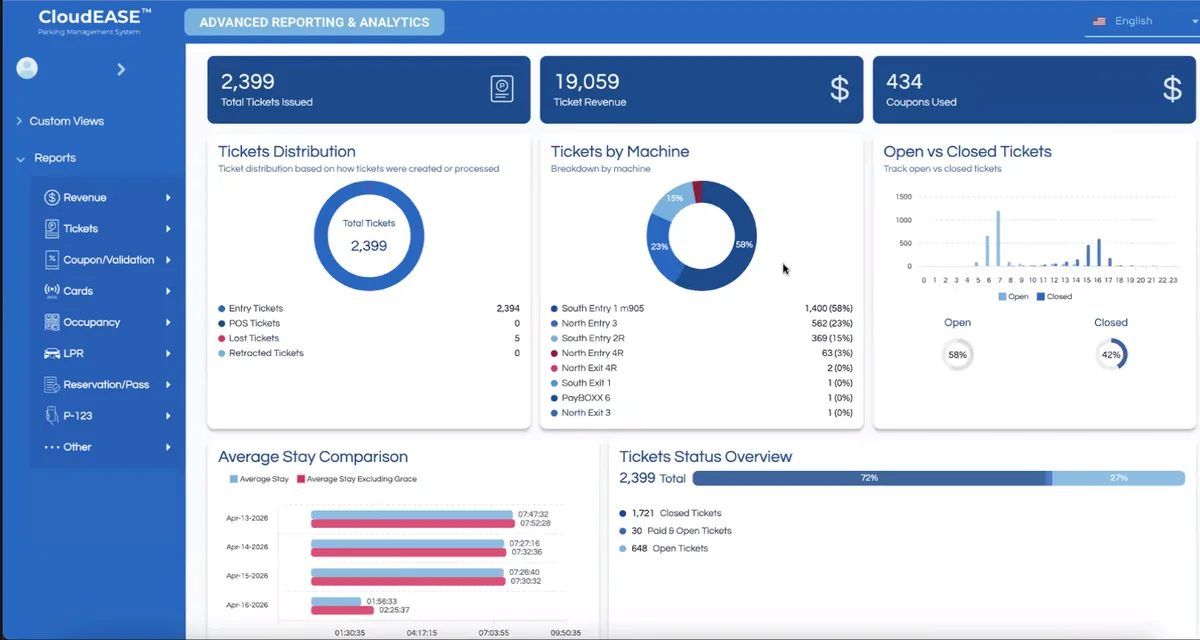
Real-Time Operator Dashboard
See which merchants are driving the most validation volume, which discount types are used most frequently, and whether any merchant is approaching their contracted monthly limit — all from a single view, updated live.
Merchant Billing Reports
Monthly reconciliation reports in CloudEASE are formatted for direct use in merchant billing: merchant name, total validations issued, total discount value applied, and a daily or weekly breakdown within the billing period. If a merchant reimburses the operator for validations above a free tier, the report generates the exact figures for an accurate invoice — no spreadsheet required.
Event Validation Windows
For event-based programs, CloudEASE supports time-limited validation windows that activate and deactivate on a schedule. The event organizer's access opens one hour before the event and closes one hour after. Any attempt outside that window is rejected and logged — preventing event codes from being used on unrelated dates without manual operator intervention.
Validation Stickers vs Digital Validation
Paper parking validation stickers have been the industry standard for decades — but they create real operational and security problems that digital validation solves completely.
Paper Validation Stickers
The traditional method. A receptionist hands the visitor a sticker; the visitor applies it to their ticket; the pay station reads it and applies the discount. Simple — but fundamentally insecure.
- Easily copied or photographed and distributed to non-customers
- No tracking — no record of which tenant issued which sticker
- No budget control — a tenant with 500 stickers can hand them out in one day
- Print and distribution costs — running out means a trip to the printer
- Changing the discount requires a new sticker design and reprint
- No audit trail — overspending becomes the parking operator's problem
Digital Validation — Validation BOXX
Each validation code is unique, time-limited, tied to a specific tenant, and tracked in real time. Fraud drops to near zero because codes cannot be copied or reused.
- Unique codes — each code is single-use and tenant-specific
- Real-time tracking — every validation logged with tenant, timestamp, and discount amount
- Monthly budget caps prevent abuse automatically
- No printing costs — codes delivered via SMS, email, or on-screen QR
- Discount changes are instant — update in CloudEASE, applies immediately
- Complete audit trail — every transaction logged for billing and compliance
Parking Validation Systems for Lots and Garages
A parking validation system is the complete solution that connects validation terminals, pay stations, barrier gates, and management software into a unified workflow. Parking BOXX builds systems for every facility type through CloudEASE.
Surface Lot Validation
For open lots with parking payment systems, validation codes are entered at the pay station or kiosk. The visitor pays any balance after the discount and leaves. No gate hardware is required for basic validation in ungated facilities.
Garage Validation with Gates
In gated garages, validation integrates with the full PARCS system. The visitor takes a ticket at entry, receives a validation code from the tenant, enters the code at the pay station before exiting, and the barrier gate opens after payment of any remaining balance.
Multi-Tenant Buildings
Office buildings, medical complexes, and mixed-use developments often have dozens of tenants sharing a single parking facility. CloudEASE handles unlimited tenant profiles, each with independent validation rules and budget caps.
Hotel & Resort Parking
Hotels use validation for guest parking, valet, and amenity visits. The Validation BOXX supports hotel folio integration — charging validated parking directly to a guest's room account without requiring a cash transaction at the pay station.
Medical & Healthcare Facilities
Medical offices and hospitals validate 100% of patient parking as a standard courtesy. CloudEASE tracks per-clinic validation usage in multi-practice buildings, enabling accurate cost allocation across billing departments.
Event & Temporary Validation
CloudEASE supports temporary validation profiles for one-time events — conferences, open houses, or promotional days. Create the profile, set the date range and discount, and it deactivates automatically when the event ends.
Frequently Asked Questions
Common questions about parking validation machines, digital validation codes, and CloudEASE validation management.
Ask a QuestionWhat is parking validation?
How does parking validation work?
What types of validation does the Validation BOXX support?
Can parking validation be configured for different discount levels?
Does the Validation BOXX work with existing parking systems?
What is the difference between validation stickers and digital validation?
Can tenants self-validate parking tickets?
How much does a parking validation machine cost?
What does it mean to validate parking?
What is a parking validation system?
Ready to Replace Stickers with Digital Validation?
Request a quote for a Validation BOXX system tailored to your facility and tenant mix. Direct manufacturer pricing, no middleman markup.